Robotics in Manufacturing & Factories
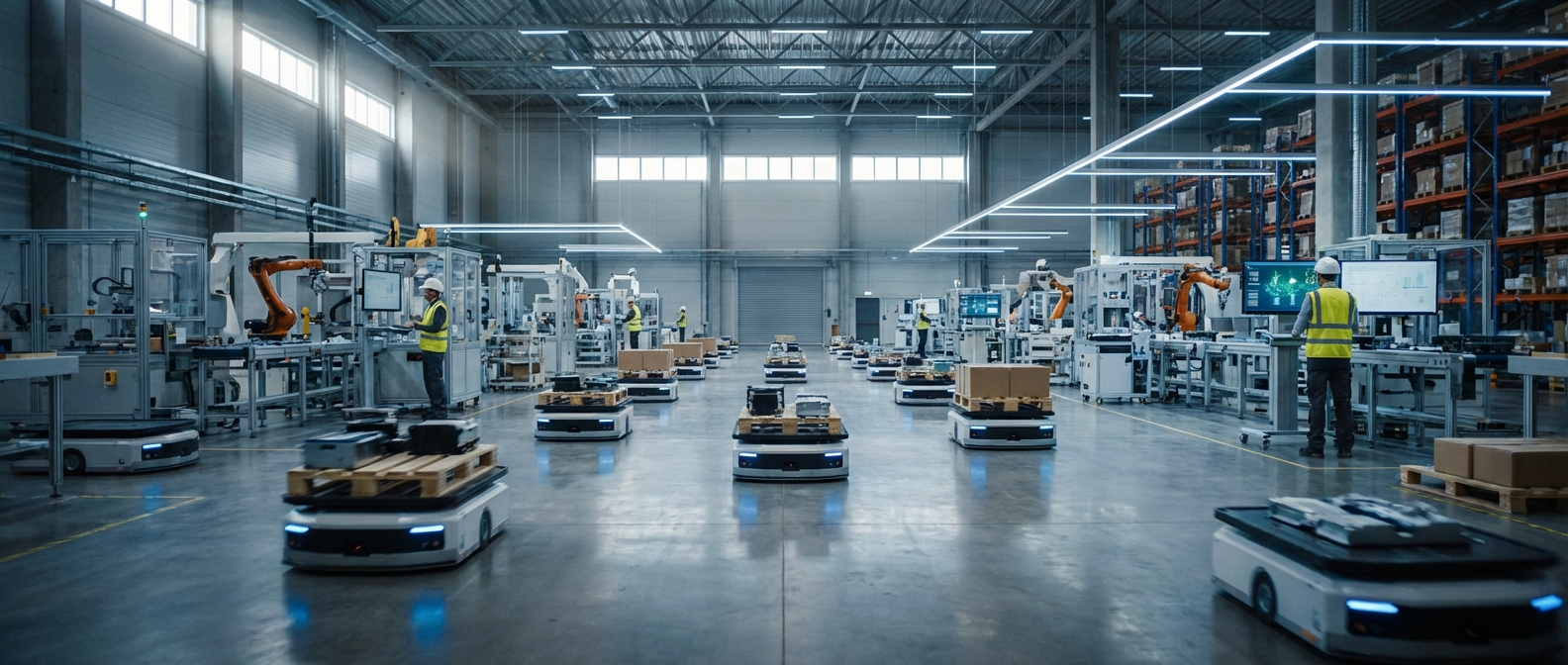
Today's factory floors are shifting from stiff assembly lines to flexible, autonomous setups. Robotics in manufacturing goes beyond heavy lifting—it's about pinpoint accuracy, connectivity, and smoothly running Industry 4.0.
Why Robotics Matters Here
Addressing Labor Shortages
Factories everywhere are short on skilled manual workers. Robots step right in to handle those repetitive tasks around the clock without ever tiring out, so your team can focus on overseeing operations and solving the tough problems.
Precision & Consistency
Nobody's perfect—human errors creep in during high-volume runs. Robotic systems hold micron-level precision over millions of cycles, slashing waste and delivering rock-solid product quality every time.
Worker Safety
Manufacturing floors often mean heavy lifting, toxic fumes, or scorching heat. Robots tackle 'the dull, dirty, and dangerous' jobs, cutting down injuries and keeping your liability low.
Production Agility
Shopper demands shift overnight. Today's cobots and AMRs get reprogrammed and redeployed in hours—not weeks—making high-mix, low-volume production a breeze.
Operational Efficiency
Throughput is the heartbeat of any factory. Automation streamlines the flow, wipes out material transport jams, and keeps assembly lines cruising at peak takt time.
Data-Driven Insights
Smart robots double as IoT sensors, grabbing real-time data on production stats and equipment condition to enable predictive maintenance that stops costly surprises.
Applications in Manufacturing & Factories
Welding Automation
Learn how welding automation transforms manufacturing & factories through consistent arc control and speed.
Explore Application →Assembly Line Transport
Learn how assembly line transport transforms manufacturing & factories using AMRs to move materials dynamically.
Explore Application →Inspection & Monitoring
Learn how inspection & monitoring transforms manufacturing & factories via high-speed vision systems.
Explore Application →How to Deploy Robotics in Your Factory
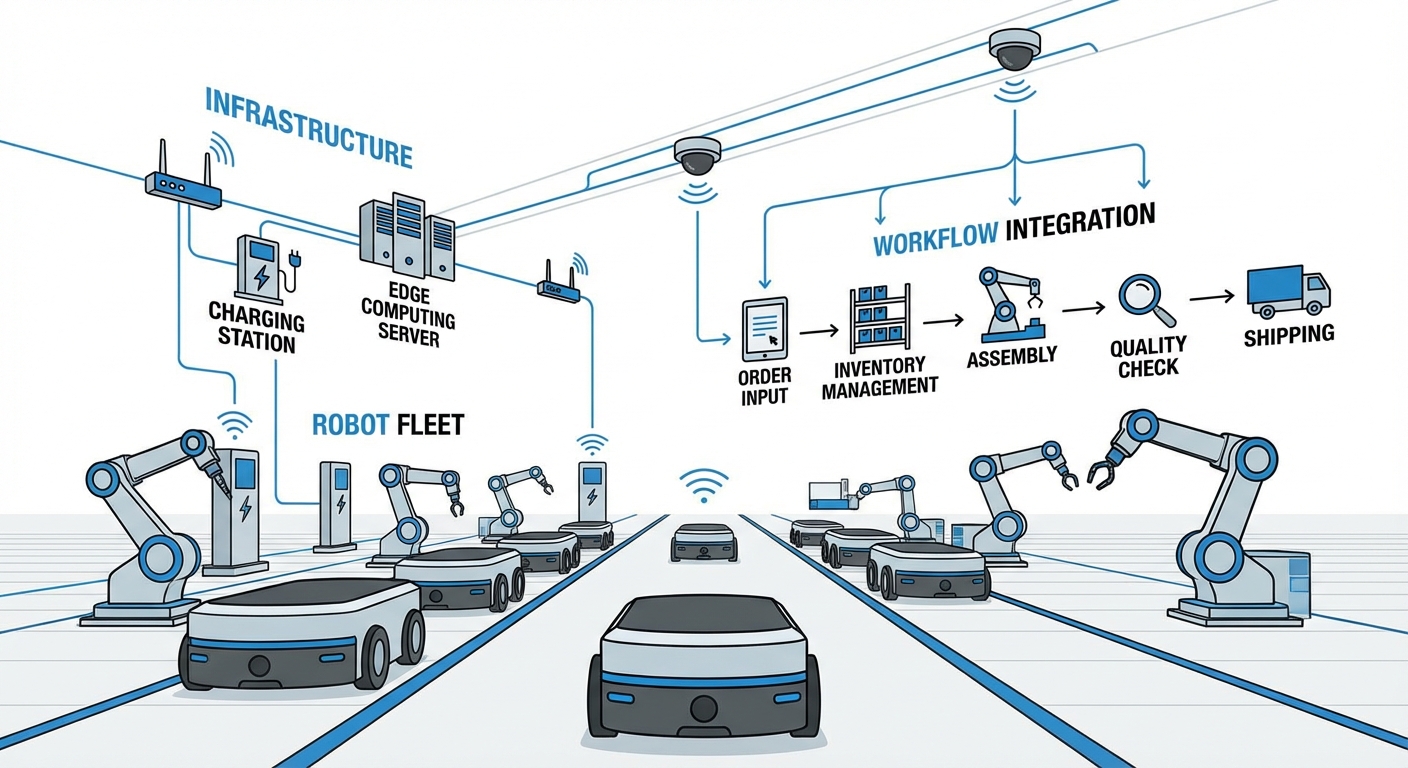
Implementing automation isn't a simple "plug and play"—it's a game-changing strategy. It kicks off with a full . We pinpoint bottlenecks where manual work creates inconsistencies—often in end-of-line packaging or inter-process logistics—and map out the ROI from labor savings and throughput boosts.
Next up: . Before any robot hits the floor, we use Digital Twins to test the setup in a virtual world. This nails down reach, cycle times, and safety zones without messing with your live operations.
Last but not least, . Real success needs your team's buy-in. We train operators to become 'robot pilots,' and once the pilot cell crushes its KPIs, we roll it out across your whole facility.
Success Stories
Reducing Cycle Time by 40%
Challenge:
Solution:
Result: 40% faster production and near-zero defects.
Precision Micro-Assembly
Challenge:
Solution:
Result: 99.9% yield rate and improved staff retention.
Autonomous Material Transport
Challenge:
Solution:
Result: Eliminated forklift accidents and optimized inventory flow.
End-of-Line Palletizing
Challenge:
Solution:
Result: 25% increase in total line throughput.
Industry-Specific Questions
What is the typical ROI timeframe for manufacturing robotics?
It depends on the setup, but most factories see ROI in 12-24 months. Key drivers? Labor savings, less scrap, and running lights-out shifts for true 24/7 production.
Can robots work with our legacy machines (Brownfield integration)?
Yes. Modern robotics plays nice with old gear using add-on sensors and PLCs. We often hook in digital I/O modules so new robots chat seamlessly with legacy CNCs or conveyors—no full line overhaul needed.
How do we handle safety in shared workspaces?
Safety follows ISO 10218 and ISO/TS 15066 standards. Options range from caging for speedy industrial bots to force sensors and LIDAR scanners on cobots that slow or stop when people get close.
What maintenance do industrial robots require?
Routine upkeep means greasing joints, inspecting cables, and software updates. But predictive tools—like vibration and heat sensors—let us maintain only when needed, dodging downtime disasters.
Are these robots difficult to program?
The field's heading to 'low-code' or 'no-code' setups. Many cobots use drag-and-teach programming—just guide the arm by hand to set points—empowering floor operators without coding expertise.
How do robots handle high-mix, low-volume production?
We use versatile end-of-arm tooling like adaptive grippers or quick-swap changers. Pair that with vision systems spotting varied parts, and one cell switches products in minutes.
Can robots operate in dirty or hazardous environments?
Absolutely. We pick robots with solid IP ratings (like IP67) for dust and water. Foundry-tough models shrug off extreme heat and molten splashes in spots too harsh for humans.
How does this impact our power consumption?
Sure, more machines use power—but robots are efficiency champs. They optimize paths, skip lighting and HVAC costs, and often net out energy-neutral or better per product.
What about cybersecurity risks?
As IIoT gear, robots get locked down with network isolation, encrypted comms (like OPC UA), and tight access rules. Every setup meets IEC 62443 cyber standards.
Can we lease robots instead of buying (RaaS)?
Yep, Robotics-as-a-Service (RaaS) is taking off. It flips costs from big upfront CAPEX to steady OPEX—like a monthly fee or per-task rate—covering maintenance and upgrades too.