Inspection & Monitoring
Send robots into hazardous areas for critical inspections. Maintain top quality, protect assets, and keep people safe.
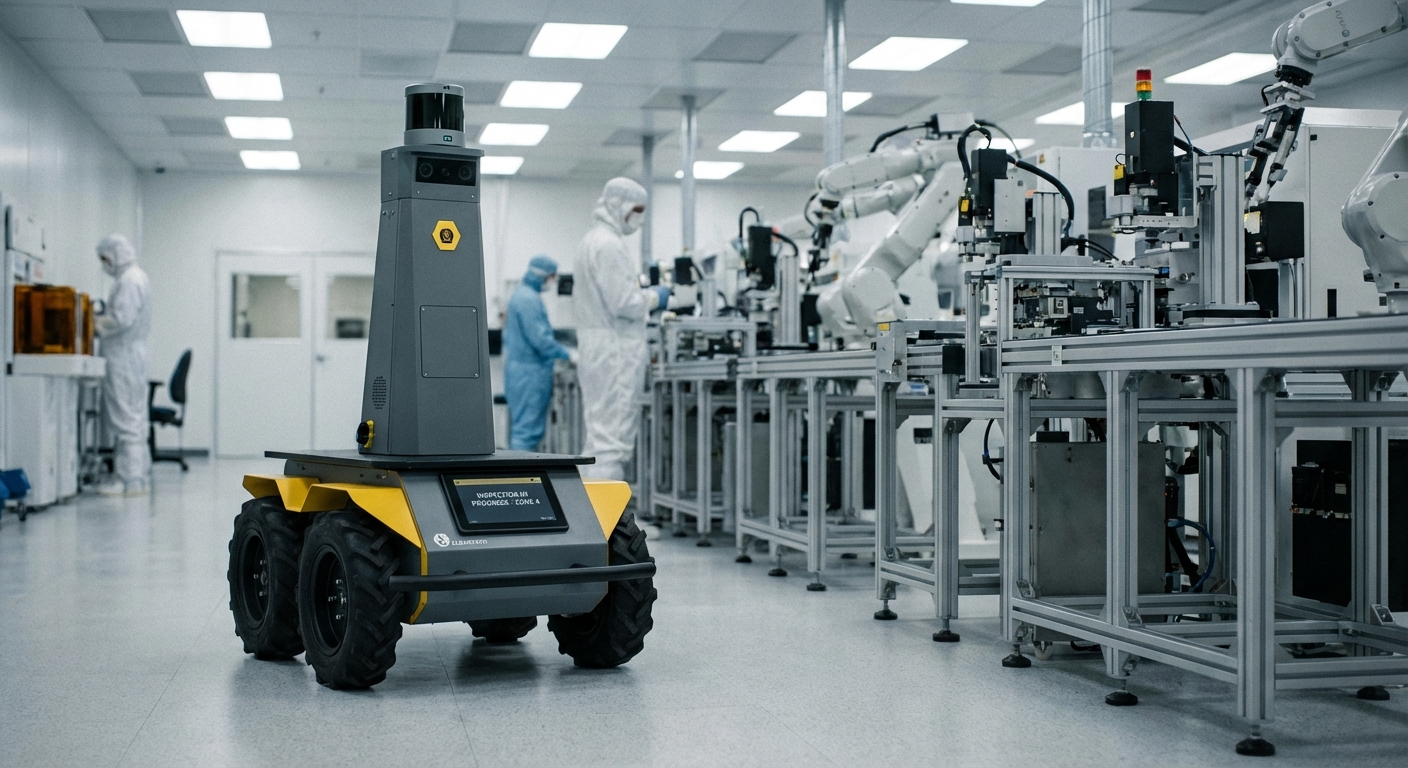
Why Automate Inspection & Monitoring?
Enhanced Safety
Pull humans from radiation, toxins, or brutal temps.
High Precision
Sensors catch defects, overheating, or leaks better than human eyes ever could.
Cost Efficiency
Cut downtime, premiums, and safety gear costs.
Continuous Operation
Round-the-clock checks without tiring, catching every issue.
Data Analytics
Turn inspections into data for predictions and trends.
Real-time Alerts
Alert HQ instantly when limits are breached for fast fixes.
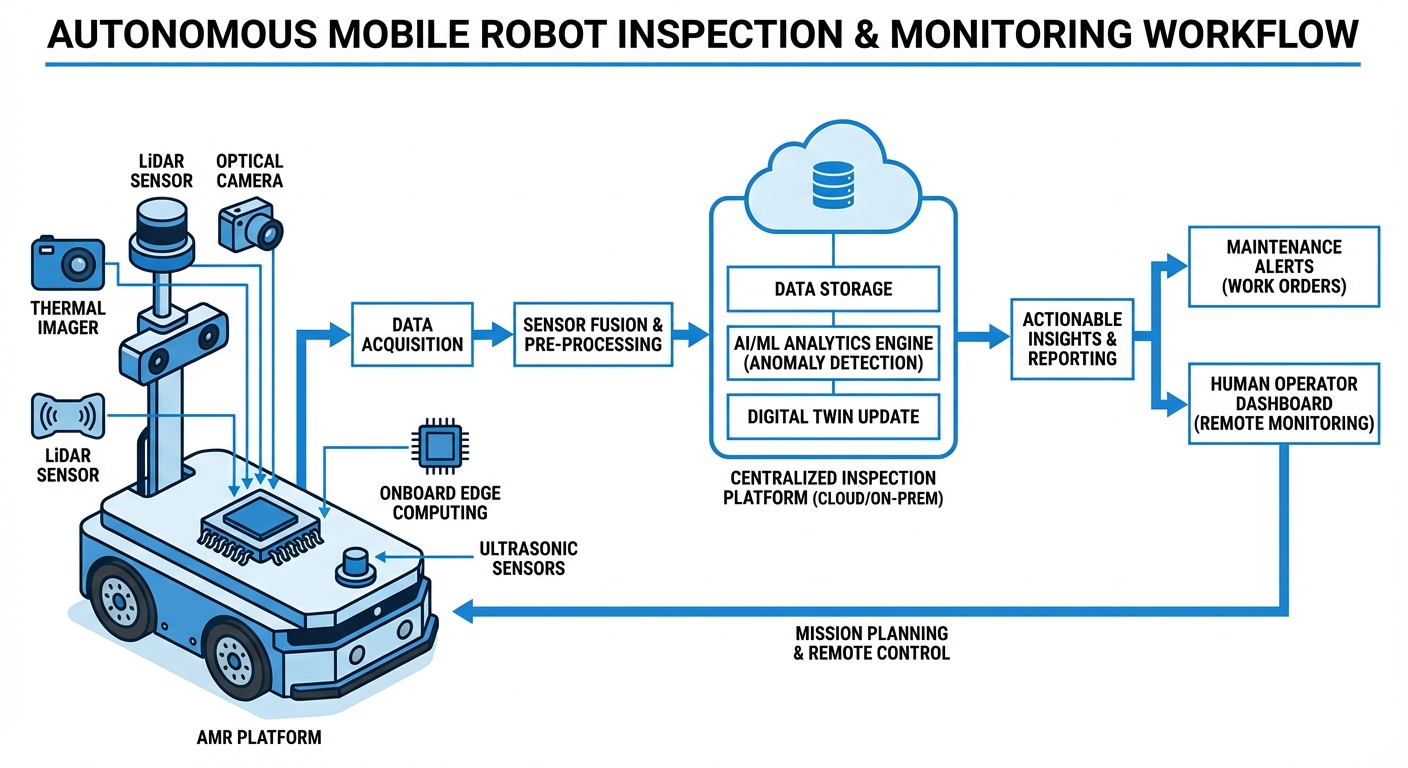
Autonomous Workflow Integration
SLAM navigation keeps it moving without GPS, ideal for patrols or remote missions.
360° LiDAR, thermal cams, gas sensors grab live data; edge AI spots hotspots, leaks, or intruders right away.
Syncs to your dashboard or SCADA for a real-time facility twin and automatic reports.
Where It's Used
Oil & Gas
Pipeline, vessel, rig checks—spot methane or read gauges remotely.
Energy & Utilities
Substations and lines: thermals catch hot transformers early.
Civil Infrastructure
Bridges, tunnels, dams: map cracks and corrosion.
Manufacturing & Warehousing
Warehouse counts and safety walks—clear paths, check gear.
What You Need
| Core Sensors | LiDAR (2D or 3D), RGB Depth Cameras, IMU |
| Specific Payloads | Thermal/IR Cameras, Ultrasonic sensors, Gas Analyzers, Acoustic sensors |
| Robot Capabilities | IP54+ rating (for outdoor), Obstacle Avoidance, Auto-docking/charging |
| Software Stack | ROS/ROS2 compatibility, Fleet Management Dashboard, Computer Vision API |
| Connectivity | WiFi 6, 4G/5G LTE module, or Local Mesh Network |
Frequently Asked Questions
What types of environments can the inspection robot handle?
Flexible setups: IP20 for indoors, IP65/67 for outdoors tackling rain, dust, and rough terrain.
Can the robot read analog gauges?
Yep—optical cams and AI read gauges, digitize values instantly.
Does the robot require continuous Wi-Fi?
Nope—runs missions offline, stores data, uploads later at base.
What is the typical battery life?
4-8 hours typical, with auto-recharge breaks between runs.
How does it handle stairs or vertical obstacles?
Wheels need ramps; for stairs, switch to quadruped bots that climb anywhere.
Is it safe to operate around humans?
You bet—LiDAR and depth cameras spot people and obstacles, stopping safely every time.
Can I integrate this with my SCADA system?
Yep—APIs, plus Modbus, MQTT, and OPC UA, integrate seamlessly with your systems.
Can the robot detect gas leaks?
Add the gas payload, and it detects VOCs, methane, and more, mapping out those hot zones.
How long does it take to set up?
Mapping takes just a few hours; we set up missions in 1-2 days based on your site size.
What happens if the robot gets stuck?
It reroutes on its own; if it gets stuck, a dashboard alert calls for teleop help.