Robotics in Agriculture & Farming
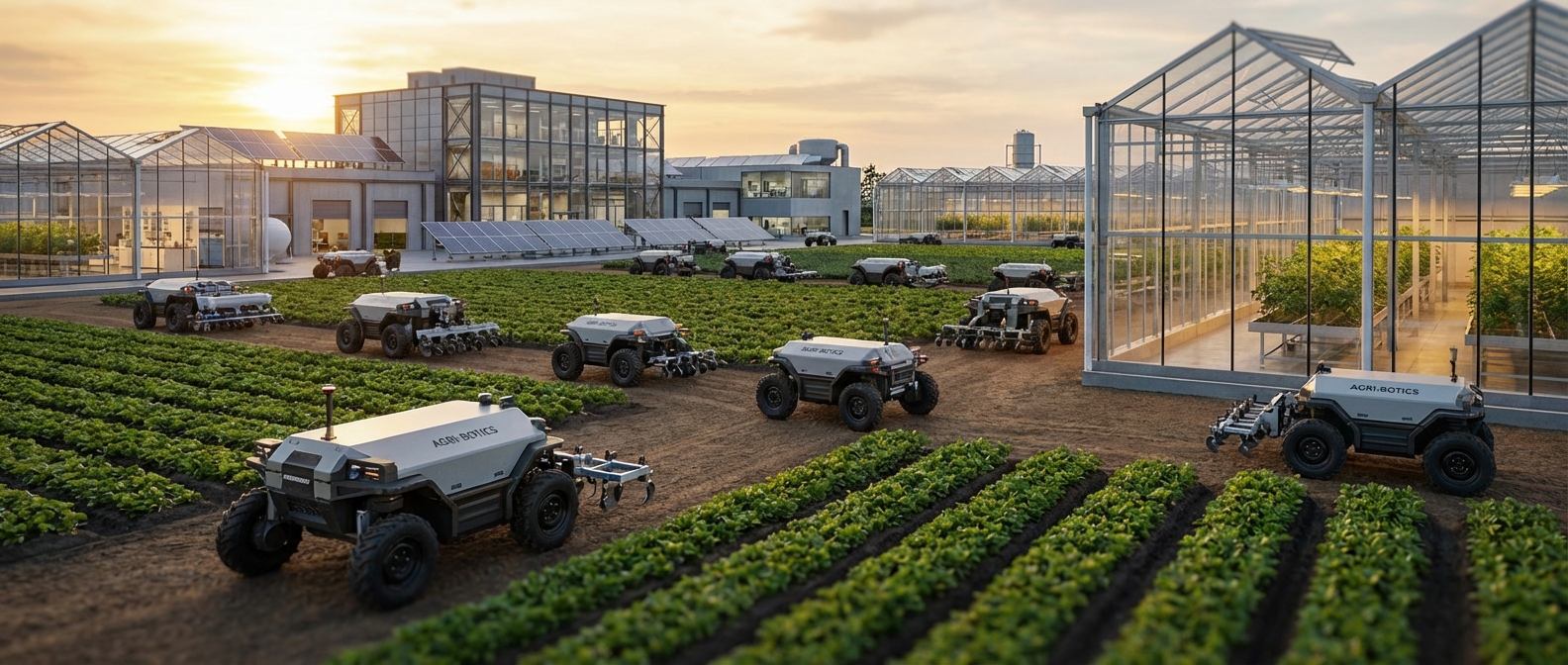
Agriculture is transforming big time with Agriculture 4.0—powered by autonomous systems and data-smart robotics. From precision planting to self-driving harvests, robots fix labor gaps, max out yields, and boost sustainability with pinpoint resource use.
Why Robotics Matters Here
Labor Shortages
Challenge:
Solution:
Precision Resource Use
Challenge:
Solution:
Soil Health
Challenge:
Solution:
Yield Consistency
Challenge:
Solution:
Weed Control
Challenge:
Solution:
Livestock Management
Challenge:
Solution:
Applications in Agriculture & Farming
Agriculture Crop Monitoring
Discover how crop monitoring is revolutionizing agriculture and farming with multispectral analysis and real-time growth tracking.
Explore Application →Precision Spraying
See how precision spraying is transforming agriculture and farming by targeting individual weeds and slashing chemical costs by up to 90%.
Explore Application →Inspection & Monitoring
Find out how inspection and monitoring are revolutionizing agriculture and farming through automated infrastructure checks and livestock tracking.
Explore Application →How to Deploy Robotic AgTech
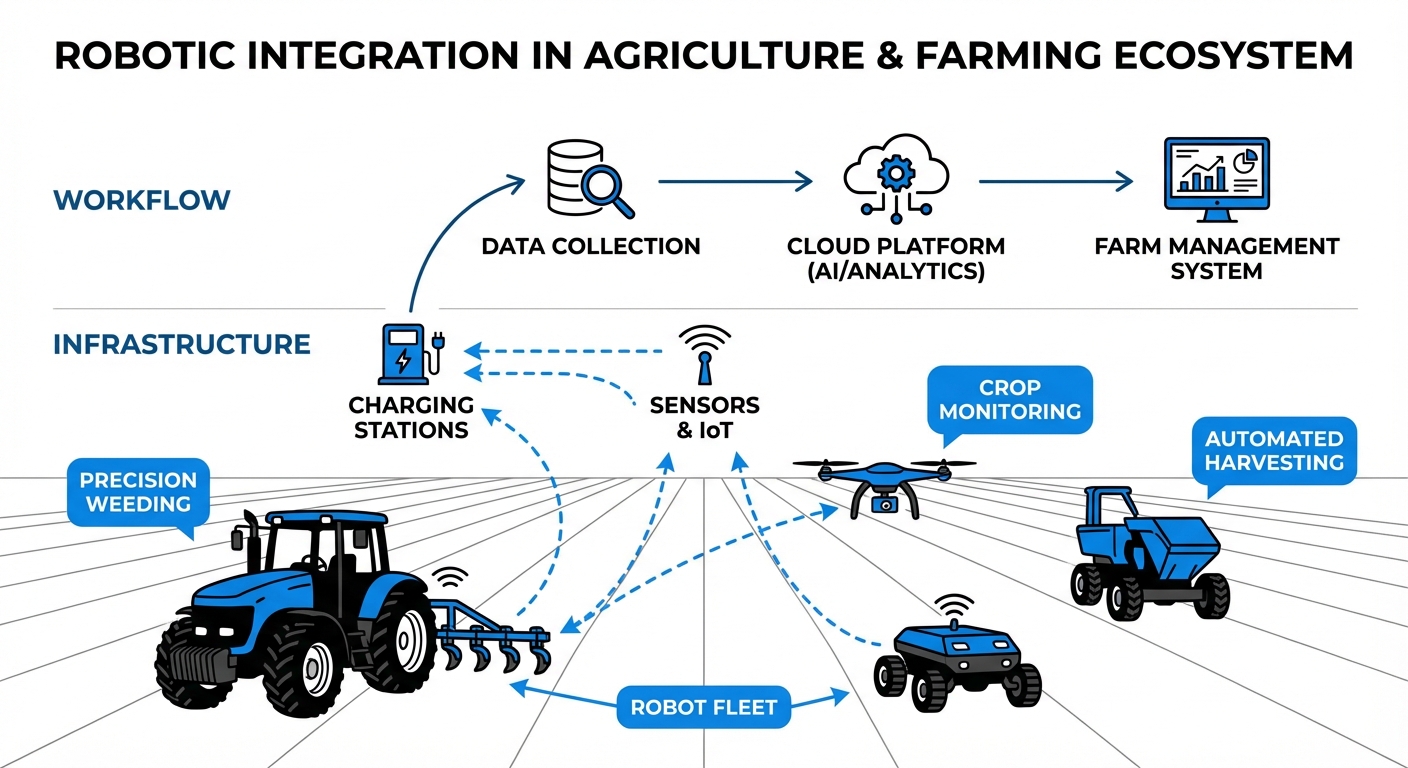
Bringing robotics to your farm takes a smart strategy to guarantee a solid ROI and smooth integration with your existing management systems. It's more than just buying gear—it's a full digital overhaul of your farm's operations.
1. Connectivity Assessment:
2. Task Audit:
3. Interoperability:
Success Stories
Washington Apple Producer
Challenge:
Solution:
Result:
Midwest Corn & Soy Farm
Challenge: Herbicide-resistant "superweeds" increasing chemical costs by 300%.
Solution:
Result:
Napa Valley Estate
Challenge:
Solution:
Result:
Vertical Greens Co.
Challenge:
Solution:
Result:
Industry-Specific Questions
What is the typical ROI timeline for agricultural robots?
ROI depends on crop and robot type. For high-value specialty crops like strawberries or vineyards, you can break even in 12-18 months thanks to labor savings. For row crops with autonomous weeding or precision spraying, expect 2-3 years based on chemical reductions.
Can robots handle tough weather like rain or mud?
Most modern ag robots are IP65 or IP67 rated, so they manage light rain and dust no problem. Heavy mud can slow smaller wheeled bots, but track-based systems and lightweight swarms are built to work in spots where big tractors would get stuck or compact the soil.
Do I need solid internet across all my fields?
Real-time data streaming needs connectivity, but many robots run 'on the edge,' processing data onboard. That said, GPS RTK for precision navigation and safety alerts usually require basic coverage like cellular, LoRaWAN, or private farm Wi-Fi.
Can these robots integrate with my existing John Deere or CNH gear?
Absolutely, more and more. Retrofit kits can make your current tractors autonomous, and ISOBUS standards ensure robotic sprayers and other smart tools communicate with standard tractor controls.
How do you ensure safety for autonomous robots in open fields?
Ag robots combine LiDAR, radar, cameras, and ultrasonic sensors to spot obstacles like people, animals, or posts—and they stop instantly. Geo-fencing keeps them locked within your field boundaries.
Are robots suitable for small or medium-sized farms?
Yes. 'Robotics as a Service' (RaaS) is on the rise, letting smaller farms rent robots for peak seasons without the big upfront cost of buying them.
What maintenance skills does my team need?
Basic upkeep like cleaning sensors, charging, or swapping batteries is straightforward. For software glitches or tricky mechanical fixes, vendor support is key—and most offer remote diagnostics.
How do robots handle crop variety and irregular planting?
AI models train on millions of images to distinguish crops from weeds. For harvesting, vision tech assesses ripeness and positioning. Unstructured fields are tricky, so precision planting often paves the way for robotic harvest.
What power sources do these robots use?
It depends. Small scouts and weeders often run on batteries or solar. Big autonomous tractors might use diesel-electric hybrids for power, but full electrification is the goal to cut emissions.
Who owns the agronomic data collected by the robots?
Data ownership matters—a lot. Trusted vendors confirm farmers own their field data, while they might use anonymized group data to train AI. Always check the EULA.
Ready to transform Agriculture & Farming?
Join the revolution of automated, sustainable, and data-driven farming.
Explore Our Robots