Precision Spraying
Upgrade surface treatments and ag apps with sub-mm precision sprays. Slash waste by 30%, coat tricky 3D shapes evenly—no more manual errors.
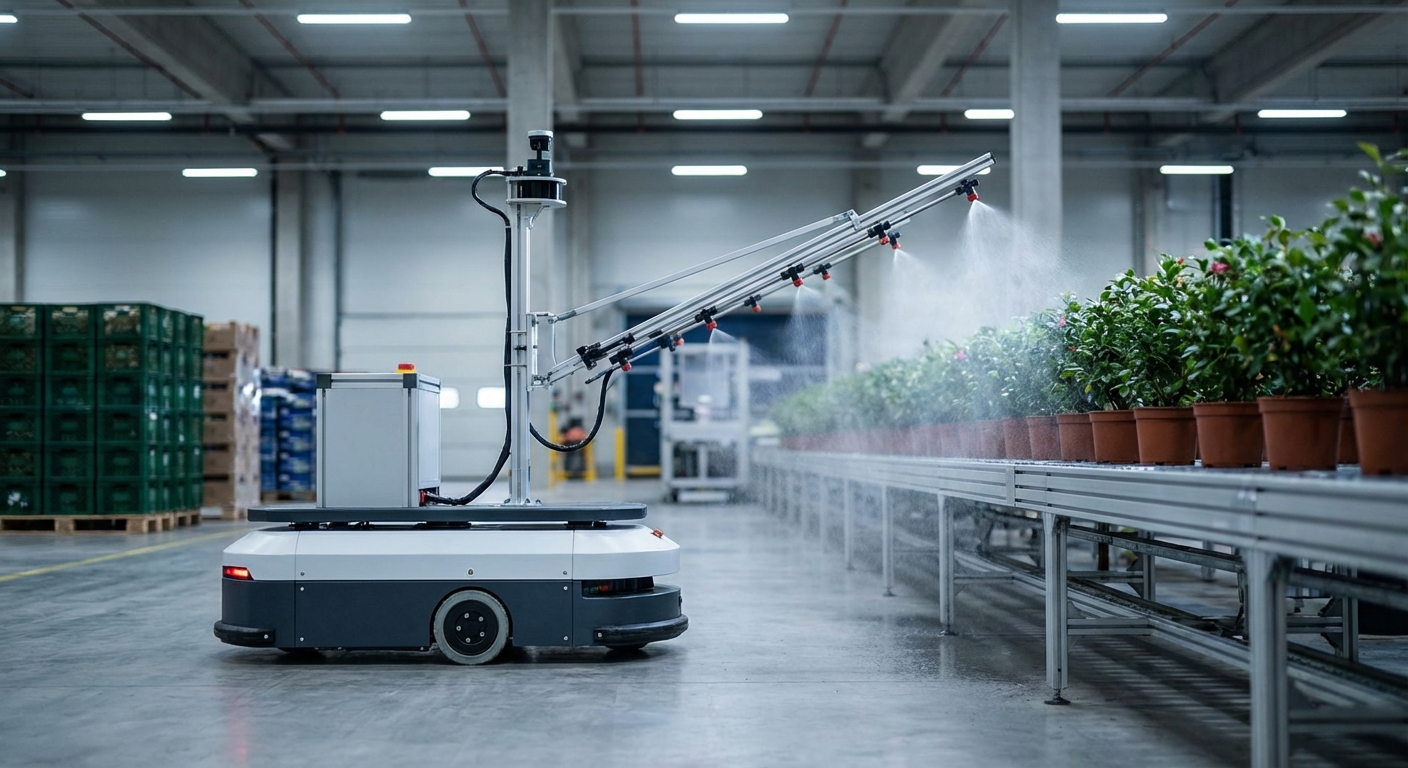
Why Automate Precision Spraying?
Drastic Material Savings
Smart flow control and optimized paths cut overspray, saving you big on costs.
Consistent Quality
Uniform thickness guaranteed. No fatigue or shaky hands.
Worker Safety
Keep folks away from VOCs, fumes, toxins.
Complex Geometry
6-axis arms hit recesses and curves gantries can't.
High Throughput
Runs 24/7 at steady speeds—beats hand spraying for way higher output.
Flexible Deployment
Reconfig software for fluids, patterns, models—no hardware swaps.
Seamless Integration & Control
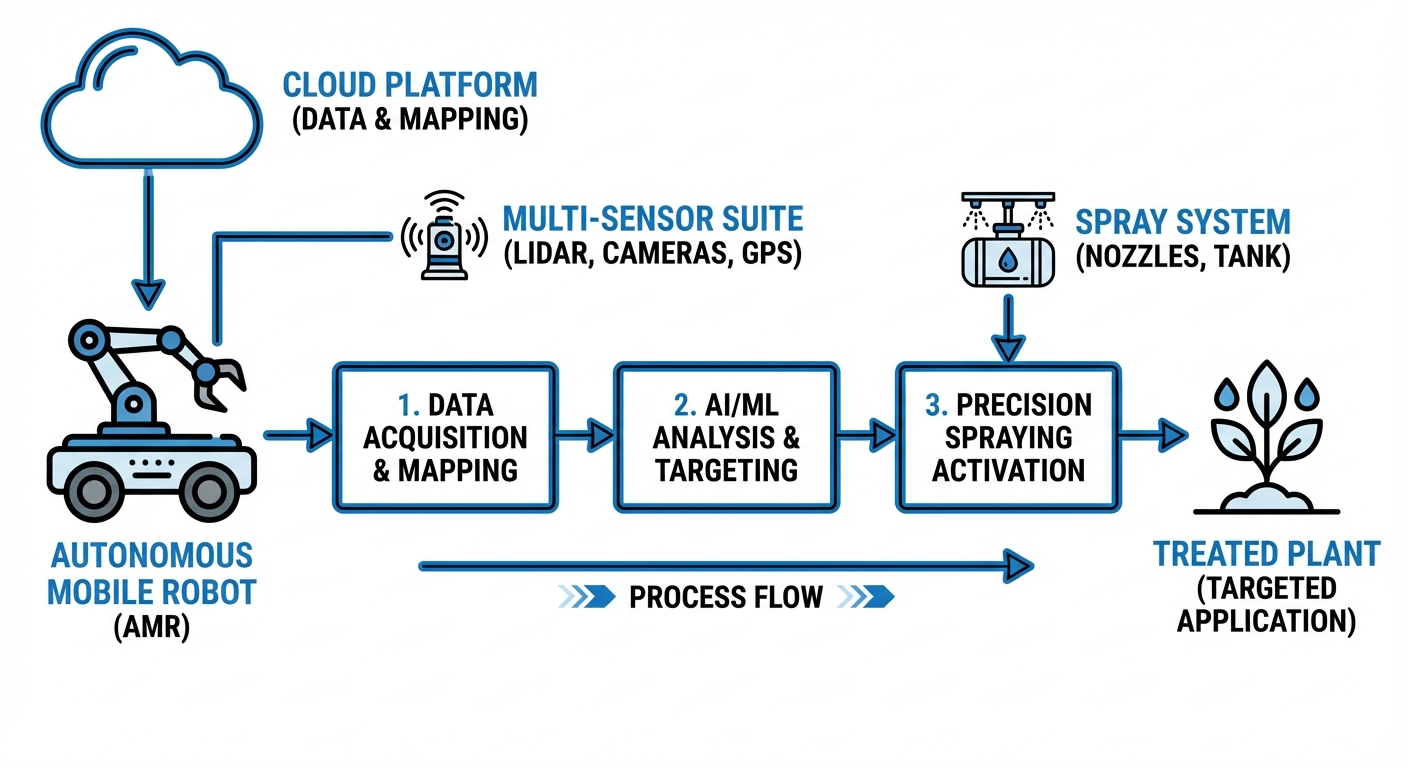
3D vision plus a 6-axis arm scans targets first, generating point clouds to adapt to shapes.
Algorithms tweak paths on the fly—speed, distance, pressure—for flawless edges with variable rate tech.
HMI tracks fluid use, humidity/temp, cycle stats live.
Where It's Used
Body Painting & Sealing
Precise primers, coats, sealants on vehicles and seams.
Spot Weed Treatment
Vision-guided bots zap weeds only, slashing herbicide 90%.
Adhesives & Bonding
Adhesives/pastes for electronics/aero—gap-free bonds.
Wood Finishing
Stains/varnishes carved furniture—steady distance on legs, backs.
What You Need
Frequently Asked Questions
How does the robot handle different fluid viscosities?
Swappable pumps (gear, piston, or diaphragm) plus flow meters handle everything from thin solvents to thick sealants effortlessly.
Can the robot spray parts on a moving conveyor?
Yes—'Conveyor Tracking' syncs to line speed via encoders for consistent sprays, even with changes.
What safety certifications are required for painting robots?
Flammables? ATEX or Class 1 Div 1 explosion-proof components required. Pressurized arm seals out gases.
How difficult is it to program new parts?
OLP software imports CAD files and auto-generates paths on your PC—run simulations right alongside production.
Does the system prevent nozzle clogging?
Built-in purge and clean cycles automatically route it to the station for flushes during changes or breaks.
What is the typical Return on Investment (ROI)?
Typical ROI in 12-18 months: 20-30% less paint, fewer fixes, higher throughput.
Can I retrofit my existing spray gun?
Possible, but auto guns outperform manuals for robot duty cycles and reliability.
How does the robot ensure uniform thickness on corners?
Software fine-tunes TCP speed and flow on curves to prevent inner buildup or outer thin spots.
Is vision integration mandatory?
Not always—if parts are perfectly fixtured, skip the vision. Essential for variable positions or mixed lines.
Can this be used for outdoor agricultural robots?
Yes—rugged mobile arms (IP65/67) with GPS/LiDAR for field work.