Robotics in Warehousing & Logistics
Logistics is shifting to intelligent automation. AMRs streamline fulfillment, autonomous forklifts manage heavy loads – solving shortages and ramping efficiency.
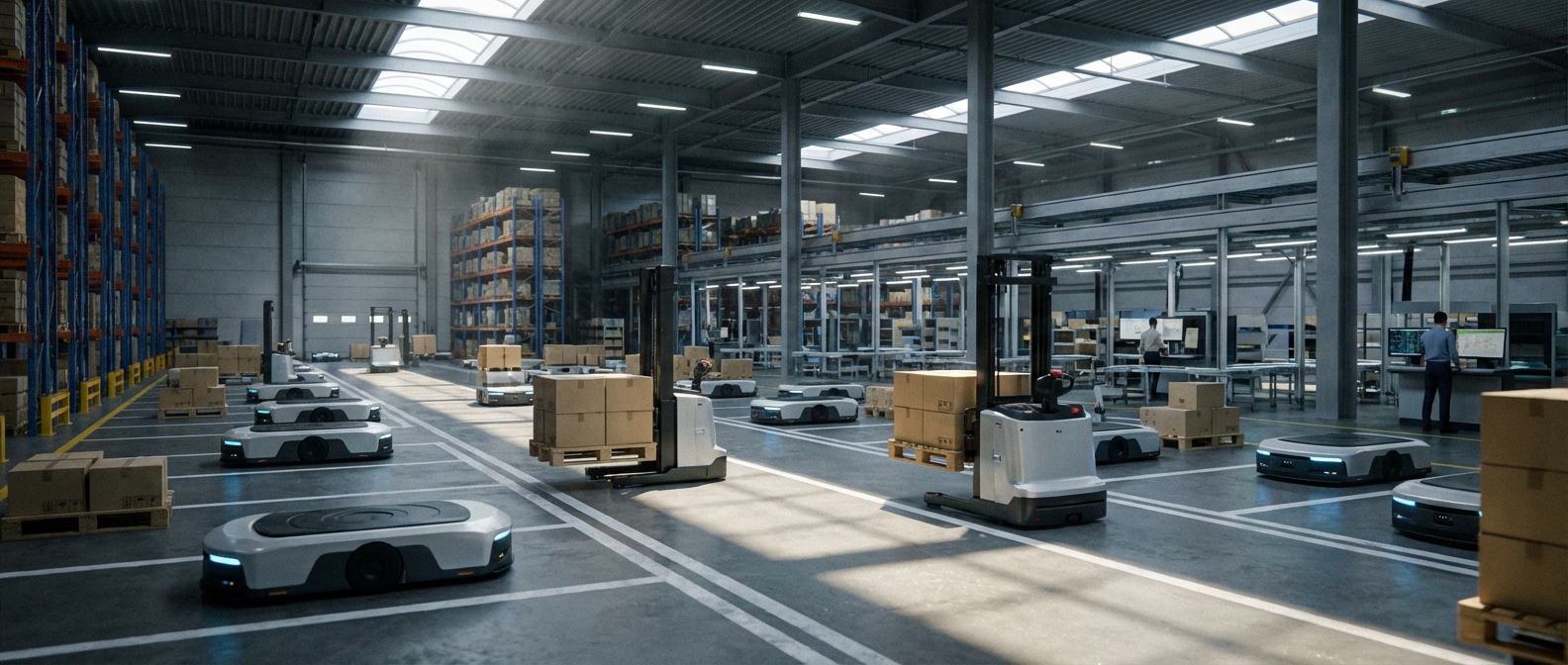
Why Robotics Matters Here
Labor Shortage Mitigation
Warehouses face nonstop staffing headaches. Robots handle endless heavy lifting without fatigue or injuries.
Order Fulfillment Speed
Next-day delivery is the new normal. AMRs slash picker travel time, boosting picks per hour.
Inventory Accuracy
Manual audits fall short. Scanning robots provide 99.9% real-time stock insights.
Space Optimization
Robots fit into tight aisles and high racks, maximizing your space.
Workplace Safety
Forklift areas are accident hotspots with heavy loads and traffic. Robots take on the risks, slashing incidents.
Scalability
Demand peaks call for flexibility. Robots scale quickly, no temp hires or training hassles.
Applications in Warehousing & Logistics
Warehouse Material Transport
Learn how warehouse material transport transforms warehousing & logistics.
Explore Application →Inventory Management & Stocktaking
See how inventory and stocktaking upgrades warehousing & logistics.
Explore Application →Assembly Line Transport
Learn how assembly line transport transforms warehousing & logistics.
Explore Application →How to Deploy
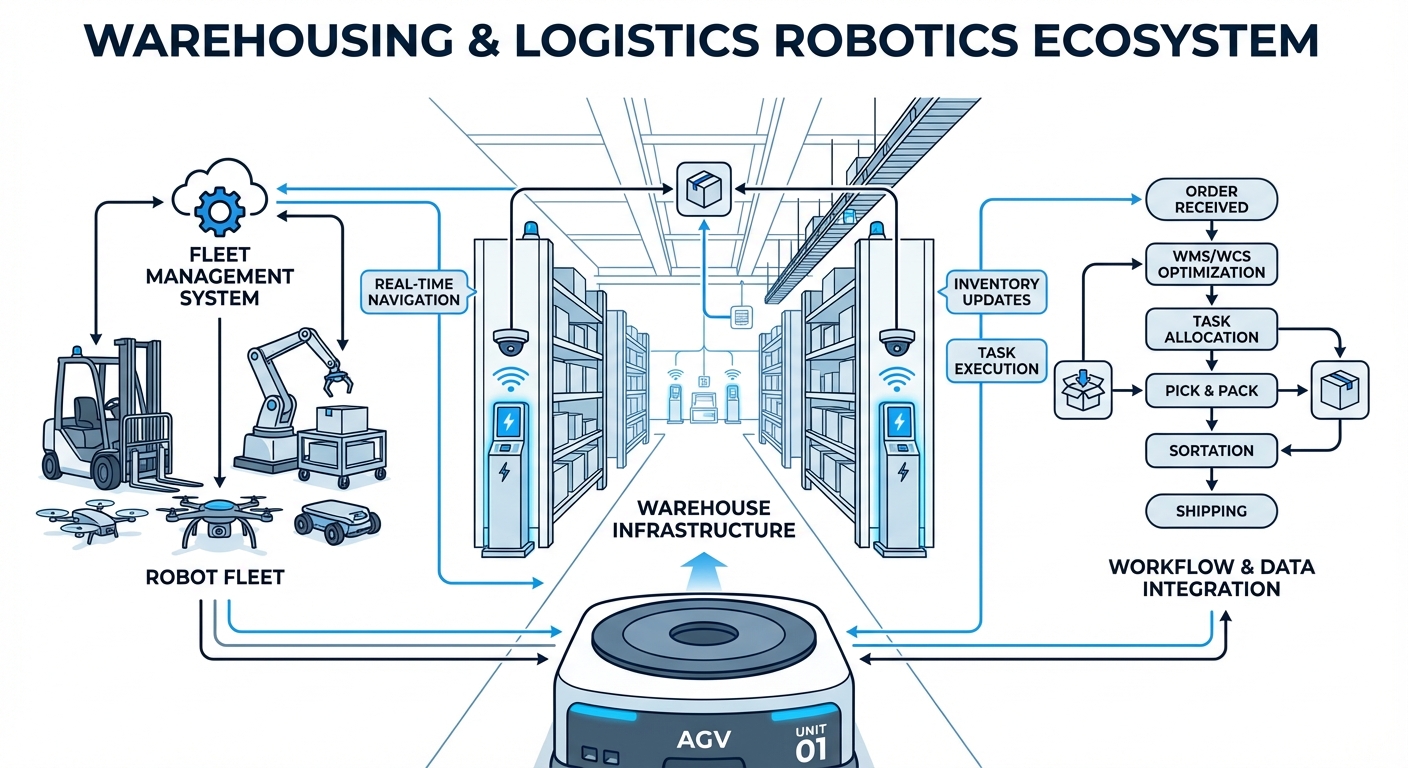
1. Workflow Assessment:
2. WMS Integration & Pilot:
3. Full-Scale Rollout:
Success Stories
Global Retailer Reduces Pick Times by 40%
Challenge:
Solution: Deployed a fleet of Goods-to-Person (GTP) robots.
Result: Order accuracy hit 99.9% and throughput nearly doubled.
Automating Pallet Movement in 200k sq/ft
Challenge:
Solution: Implementation of Autonomous Forklifts for long-haul transport.
Result: Zero incidents in year one, ops costs down 30%.
Operations in -20°F Environments
Challenge:
Solution:
Result: Continuous 24/7 operation without environmental breaks.
Just-In-Time Manufacturing Supply
Challenge: Line-side delivery of parts was inconsistent, halting production.
Solution: Tugger robots following magnetic tape and LiDAR navigation.
Result: Full uptime for line feeds, less WIP stock.
Industry-Specific Questions
Do these robots require changes to existing racking infrastructure?
Nah, most AMRs and auto-forklifts use LiDAR/SLAM to map your space. They navigate standard aisles and pallets – no tapes or bolts required.
How do robots integrate with our WMS/ERP?
Our software connects via REST APIs and integrates smoothly with SAP, Oracle, Manhattan WMS, and more. Your system sends orders our way, and we pick the perfect bot for the job.
Are the robots safe to work alongside humans?
Yes, they meet ANSI/RIA R15.08 standards with 360° LiDAR, 3D cameras, and emergency stops. They spot obstacles or people and brake to a smooth stop.
What happens if the Wi-Fi connection is lost?
WiFi is crucial for pulling in orders from the server, but navigation and avoidance happen onboard. If the signal drops, they safely finish up or pause in place—no risks at all.
How is charging managed for 24/7 operations?
We use opportunity charging: bots dock for a quick top-up during idle times or breaks. In high-intensity ops, battery swaps or a well-sized fleet keep some charging while others stay on the move.
What is the typical payload capacity?
It depends on the model. Bin bots handle 50-100kg; pallet AMRs manage up to 1,000-1,500kg; heavy forklifts can take over 3,000kg when set up right.
Can they handle uneven floors or ramps?
AMRs love smooth concrete, but our rugged ones tackle joints and 5-8% ramps with their suspension. We always check your floors first.
What is the ROI timeframe?
Multi-shift ROI? Expect it in 12-18 months from labor savings, lower turnover and damage, plus big throughput gains.
How long does deployment take?
Standard rollout takes 4-8 weeks for mapping, IT integration, workflows, and testing. Tricky retrofits? Just a bit longer.
Can the robots work in dark warehouses?
Yep. LiDAR doesn't care about light, so they run in the dark and slash your energy bills.