Lithium-Ion Batteries
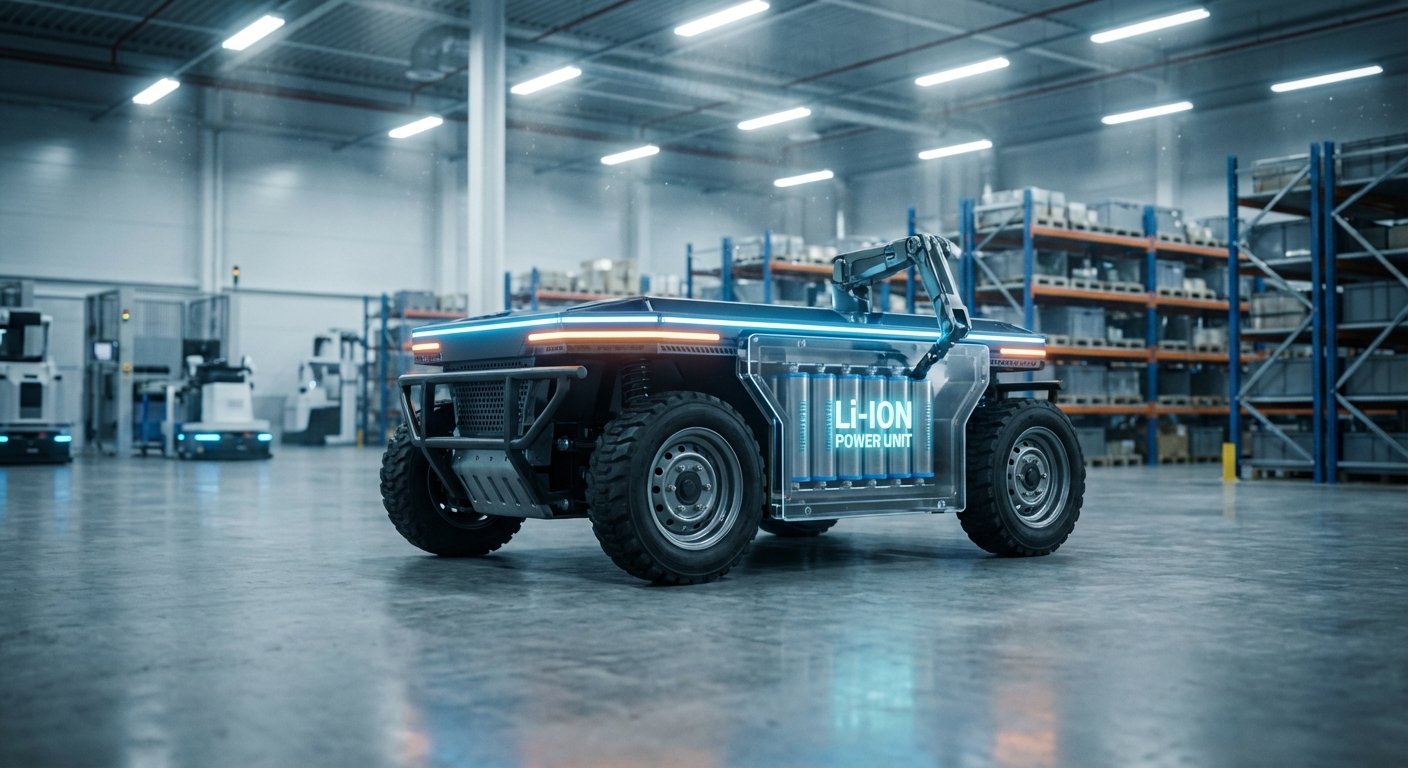
We're shaking up autonomous logistics with incredible energy density and super-fast opportunity charging. Lithium-ion tech wipes out downtime, delivering the steady, clean power your mobile robots need for round-the-clock operations.
Core Concepts
Energy Density
Lithium-ion cells cram way more energy into a tiny space compared to clunky lead-acid batteries. That means your compact AGVs can haul heavier loads without giving up precious internal room.
Opportunity Charging
Unlike those old-school battery types, Li-ion handles quick top-ups during short breaks. Your robot can grab enough juice from just 10 minutes to keep going strong, powering seamless 24-hour workflows.
BMS Integration
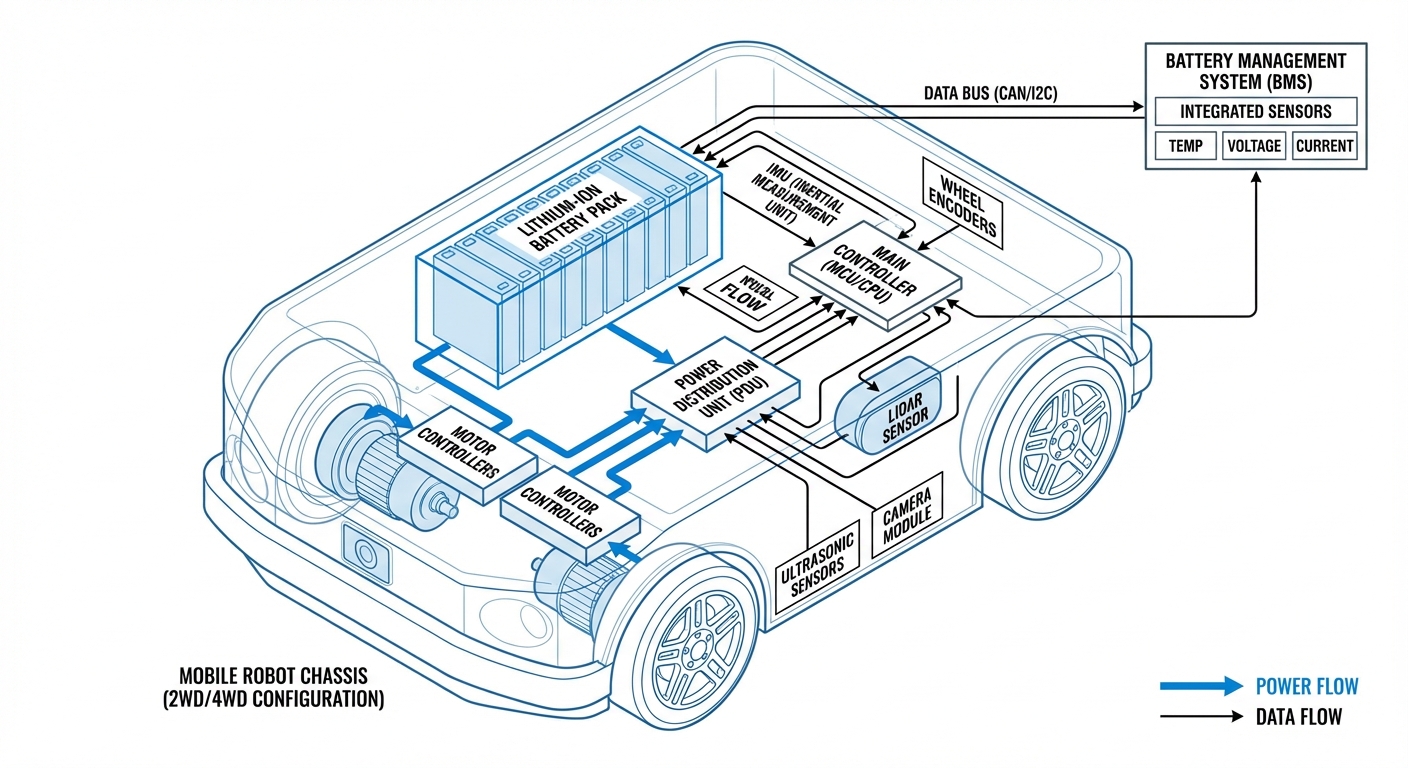
The Battery Management System—or BMS—is the smart brain of the battery pack. It chats directly with your robot's controller over CAN bus, keeping tabs on cell voltage, temperature, and stopping over-discharge before it happens.
Cycle Life
Li-ion batteries easily handle 3,000 to 5,000 charge cycles before their capacity really drops off. That kind of longevity slashes your Total Cost of Ownership over the robot's life.
Maintenance Free
These batteries are completely sealed—no watering or fussing required. Perfect for autonomous fleets, where skipping human maintenance is the whole point of automation.
Consistent Voltage
Li-ion keeps a rock-steady voltage all the way through discharge. So your AGV motors deliver consistent torque and speed, whether the battery's at 90% or down to 20%.
How It Works: The Chemistry of Autonomy
At the core of every lithium-ion battery pack for robots is lithium ions shuttling between the cathode and anode during charging and discharging. For robotics, we group individual cells—usually cylindrical 18650/21700 or prismatic ones—in series and parallel to hit the exact voltage (like 24V or 48V) and capacity your AGV needs.
Unlike your phone's battery, industrial robotics packs come with a smart Battery Management System (BMS). It balances charge across cells for even performance. Spot a bad cell or overheating? The BMS isolates it and alerts the robot's brain to stop safely or head back to charge.
Lithium chemistry's high discharge rates let robots tackle power-hungry tasks—like lifting heavy pallets or climbing ramps—without voltage drops that could crash the system.
Real-World Applications
E-Commerce Warehousing
In huge fulfillment centers, AMR fleets run 24/7 with quick opportunity charges. Li-ion lets robots dock for just 5 minutes hourly, ditching battery swap stations and maxing out your fleet's uptime.
Cleanroom Manufacturing
Semiconductor and pharma plants demand zero emissions. While lead-acid can leak hydrogen gas, sealed Li-ion packs are totally safe for those pristine ISO cleanrooms.
Heavy Payload Transport
For AGVs hauling ton-heavy chassis in auto assembly, Li-ion's sky-high energy density powers beefy traction motors without piling on extra vehicle weight.
Cold Chain Logistics
Today's Li-ion packs with built-in heaters shine in cold storage warehouses. They stay efficient even in sub-zero temps, where other batteries tank hard on capacity.
Frequently Asked Questions
What’s the biggest win of Li-ion over lead-acid for AGVs?
The killer advantage is 'opportunity charging' plus zero maintenance. Li-ion soaks up high current in short bursts without harm, letting robots recharge during quick workflow pauses—lead-acid needs long, uninterrupted sessions and constant watering.
How does the Battery Management System (BMS) ensure safety?
The BMS keeps a constant eye on every cell's voltage, current, and temp. Spot potential trouble like over-voltage or extreme heat? It cuts power instantly and pings the robot controller with an error.
What’s the typical lifespan of a Li-ion battery in robotics?
In real-world industrial use, expect 3,000 to 5,000 full cycles while holding at least 80% capacity. For 24/7 robots, that's often 5-7 years before you need a swap.
Can I swap lead-acid for lithium-ion in my existing AGV?
Absolutely, retrofits are super common. Just check your counterweight balance since Li-ion's lighter. You'll also need a new charger or profile tweak, and maybe update the battery gauge for accurate SoC readings.
Does Li-Ion technology present a fire risk in warehouses?
Li-ion packs more energy, but we use stable LiFePO4 chemistry in industrial ones—super resistant to thermal runaway. Pair it with backup BMS safeties, and risks are as low as any other industrial gear.
How does temperature affect Li-Ion performance?
Li-ion thrives between 10°C and 30°C. We avoid charging below freezing to dodge lithium plating damage, but discharging works fine in the cold—and many packs have heaters for chilly spots.
What’s the recommended Depth of Discharge (DoD) for these batteries?
You can safely drain Li-ion to 90-95% DoD, unlocking nearly full capacity without harm. Lead-acid? Stick to 50% max or kiss its life goodbye.
How is the State of Charge (SoC) calculated?
The BMS tracks SoC with Coulomb counting (current in vs. out) plus voltage checks, sending it over CAN bus to your robot's nav system. That way, the fleet manager auto-routes bots to chargers when needed.
Are there recycling options for industrial Li-Ion batteries?
Yeah, recycling's getting better fast. We recover goodies like lithium, cobalt, and nickel. Lots of makers now run take-back programs for eco-friendly end-of-life handling.
Is the upfront cost higher than traditional batteries?
True, upfront cost is 2-3x higher than lead-acid. But with 3x the lifespan, no maintenance hassles, better efficiency, and more uptime, your 5-year TCO drops big time.
Do Li-Ion batteries suffer from "Memory Effect"?
Nope, no memory effect with lithium-ion. No need to fully drain before recharge—in fact, shallow cycles and frequent top-ups (opportunity charging) are ideal for the chemistry.