Linear Actuators
The powerhouse of modern automation: linear actuators turn electricity into pinpoint straight-line motion. Vital for AGV lifts, auto-hitching, and handling – the push-pull force propelling logistics.
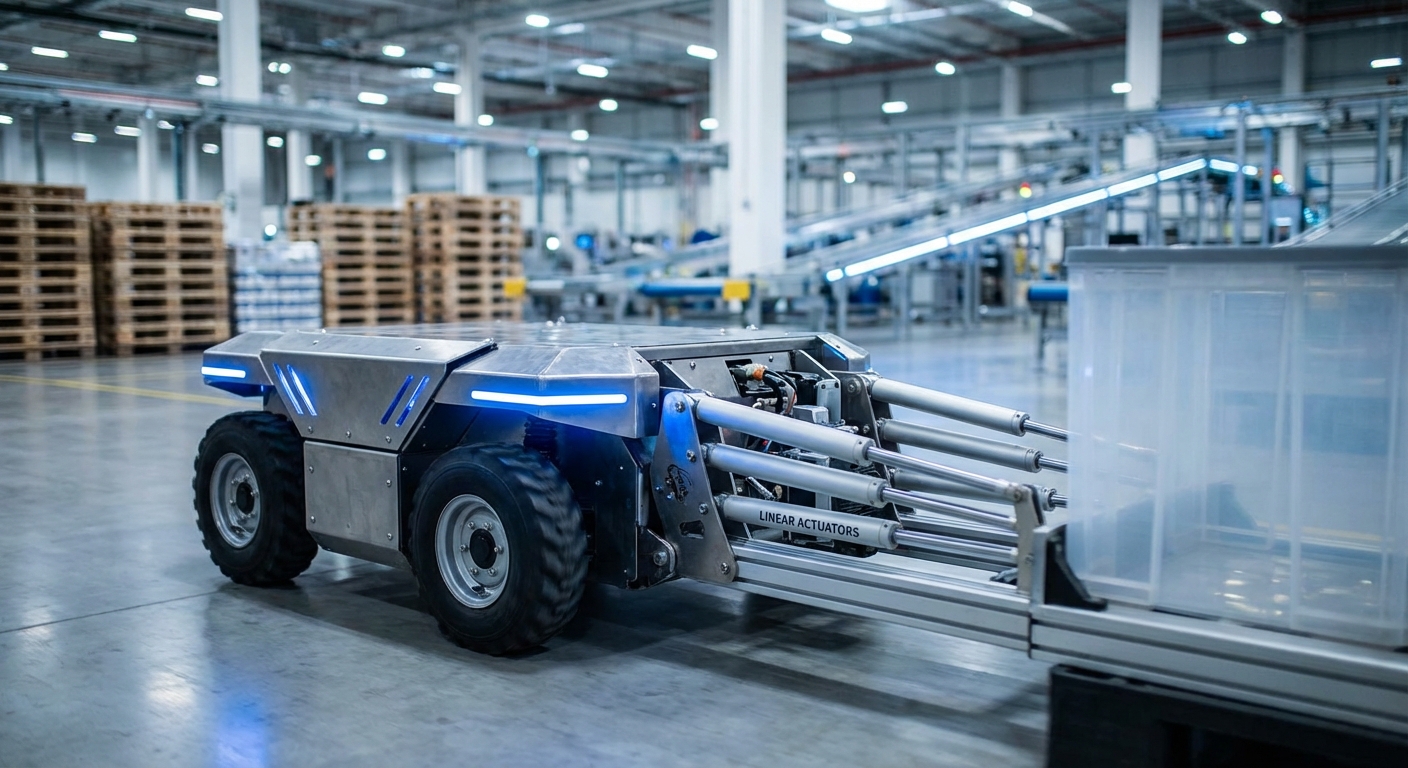
Core Concepts
Stroke Length
How far the rod stretches from retracted to extended. For AGVs, it sets your lift height or latch reach.
Load Capacity
Static (holding still) vs Dynamic (in motion) loads. Key to picking one that lifts your payload without choking.
Speed vs. Force
Speed and force trade off inversely. Beefier gear ratios mean more lift power, but slower speeds.
Duty Cycle
Duty cycle: how long it runs without overheating. Crucial math for busy warehouse cycles.
IP Rating
IP ratings show dust and water resistance. IP66+ is go-to for wash-down food ops or grimy floors.
Feedback Sensors
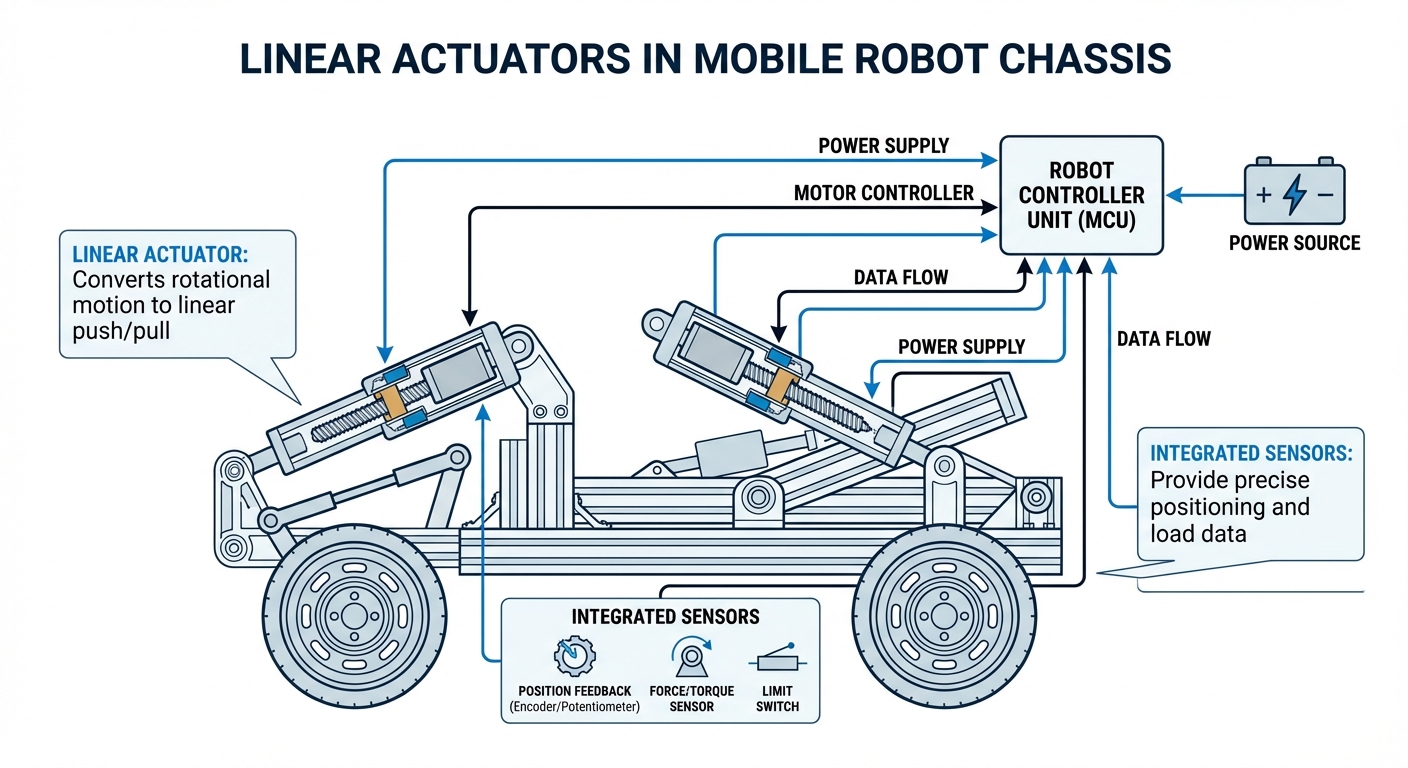
Hall sensors or pots feed position data to the controller for synced moves and exact stops.
How It Works
At its core, an electric linear actuator packs a DC motor (brushed or brushless) geared down for torque. That spins a lead screw or ball screw.
The screw's spin drives a non-rotating nut linearly along the threads, shoving the extension tube out – or reeling it back in.
For AGVs, this beats hydraulics hands down—no fluids, pumps, or hoses required. It's a 'clean' actuation method that's super easy to integrate into your robot's existing electrical system (usually 24V or 48V).
Real-World Applications
Underride AGV Lifting
The go-to use case: An AGV glides under a cart, and linear actuators lift a plate to hook onto the cart's frame, raising the wheels off the ground for smooth transport.
Automatic Hitching
Perfect for tugger AGVs—it automatically couples and decouples trailers by driving a locking pin up or down into the trailer's tow bar loop with a linear actuator.
Variable Height Conveyors
Ideal for mobile robots with top modules that need to line up with different factory stations. Actuators tweak the conveyor deck height to match the input/output ports on CNC machines.
Battery Exchange Mechanisms
In automated battery swapping stations, rugged actuators shove spent batteries out of the AGV chassis and slide fresh ones right into place.
Frequently Asked Questions
What's the difference between a Lead Screw and a Ball Screw actuator?
Lead screws rely on sliding friction—they're quieter, self-locking, and more affordable, but less efficient. Ball screws use rolling ball bearings for top efficiency, higher speeds, and longer life, though they usually need a brake to hold position without power.
Does an AGV linear actuator need a brake?
It depends on the screw type and pitch. Lots of lead screw actuators are self-locking, so the load won't back-drive the motor if power cuts out. But for safety in vertical lifts or with efficient ball screws, you need an electromechanical brake to avoid any drops.
How do I sync two actuators for even platform lifting?
Grab actuators with feedback sensors like Hall effect or potentiometers. A smart controller reads position pulses from both at once and dials back the voltage (speed) on the faster one to match the slower, keeping everything perfectly level.
What voltage should I choose for my mobile robot?
Most industrial AGVs run on 24V or 48V DC systems. Match your actuator voltage to the battery to skip inefficient, pricey DC-DC converters. 12V shows up in cars but not so much in heavy-duty robotics.
What's the typical duty cycle for an electric actuator?
Standard ones handle 10% to 25% duty at full load—for every minute of work, they need 4 to 9 minutes to cool off. For busy logistics, go bigger or pick high-duty cycle models built for the grind.
How does temperature affect actuator performance?
Freezing temps thicken the grease, ramping up resistance and amp draw, which might trip over-current protection. Heat cuts the duty cycle. For cold storage, order low-temp lubricants upfront.
Can linear actuators be used outdoors?
Absolutely, but IP rating matters big time. Aim for IP66 (handles strong jets) or IP69K (high-pressure or steam cleaning). Use corrosion-resistant housings like stainless steel or powder-coated aluminum in wet or salty spots.
What happens if the actuator hits an obstruction?
Without safeguards, the motor stalls, current spikes, and it could fry or strip gears. Smart controllers with Over Current Protection (OCP) cut power instantly if limits are hit, working like an electronic clutch.
How accurate is the positioning?
Hall effect sensors give accuracy based on gear and screw pitch—usually 0.5mm to 1mm. For super-precise stuff like optical alignment, switch to stepper motors or linear servos.
Why are electric actuators preferred over hydraulic for AGVs?
Hydraulics leak, need constant maintenance like fluid swaps, and waste energy with always-on pumps. Electric actuators only draw power when moving, stay clean, and give easy digital feedback for automation.