IP Ratings and Waterproofing
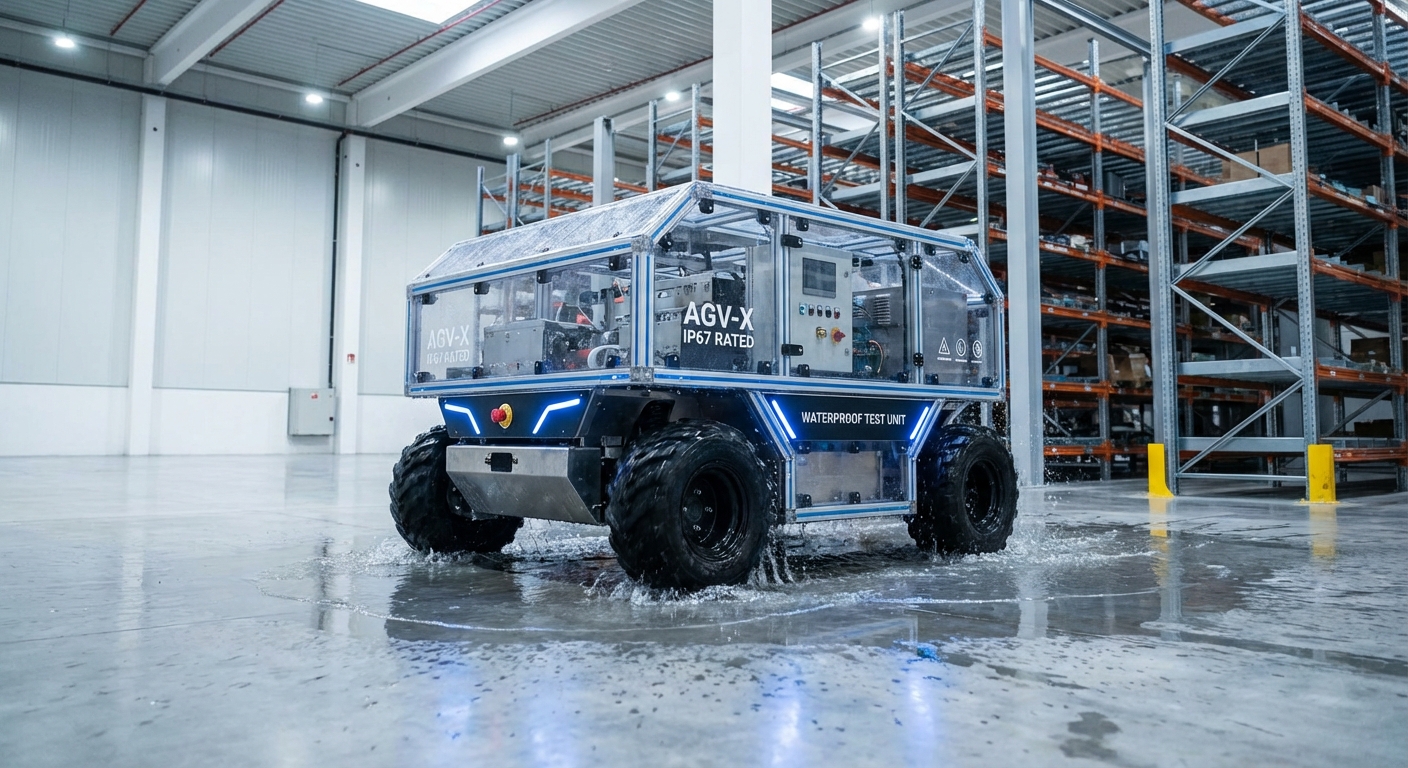
IP ratings spell out how tough your autonomous mobile robots are against dust and water. Getting these right is key for keeping your fleet humming in tough spots, like washdown food plants or dusty job sites.
Core Concepts
The First Digit (Solids)
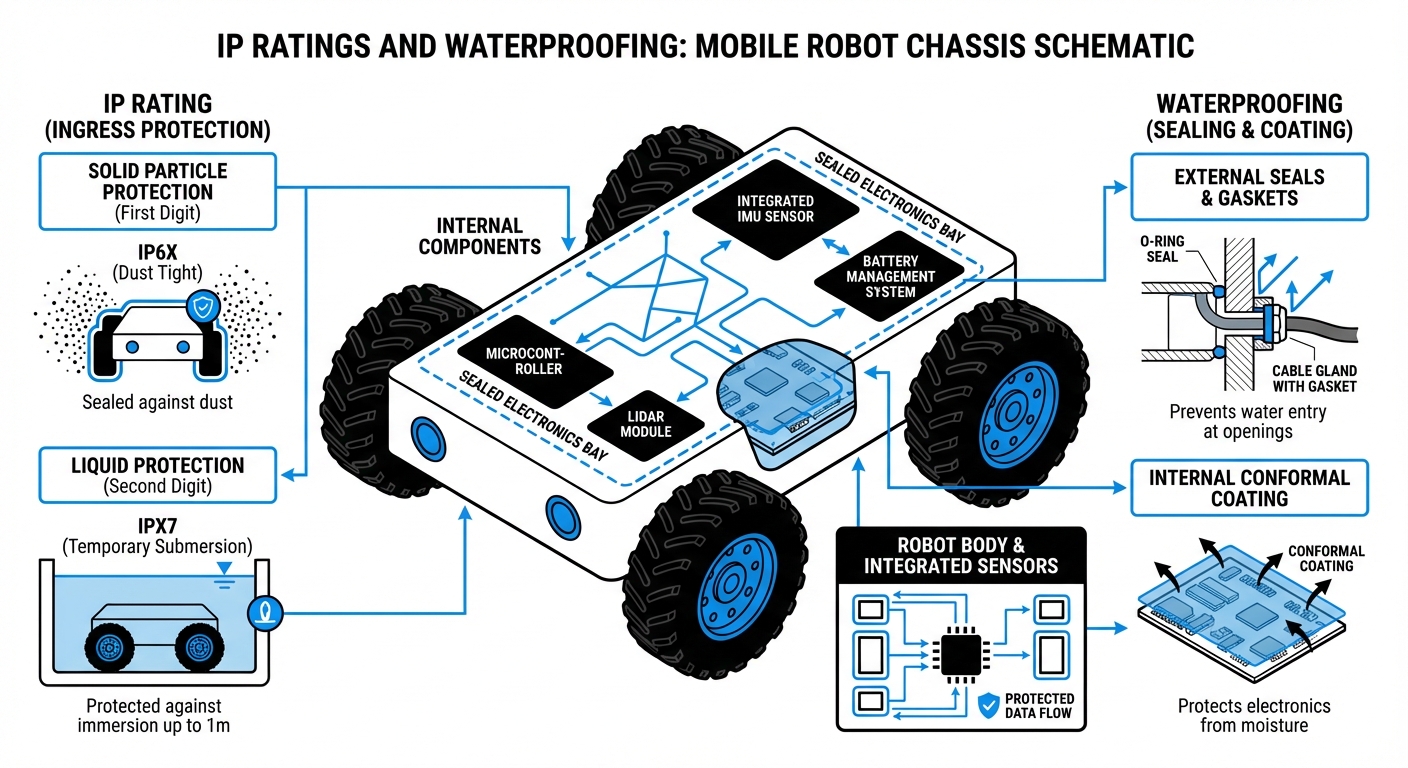
The first digit in an IP code (like '6' in IP65) rates solid-particle protection. It goes 0 (none) to 6 (dust-tight)—vital for metal shavings or flour-heavy areas.
The Second Digit (Liquids)
The second digit (like '5' in IP65) gauges water resistance, from 0 to 9K. That covers drips to scorching, high-pressure jets.
Sealing Engineering
Waterproofing goes beyond the case. It's gaskets, O-rings, and potting that shield PCBs and sensors, all while letting heat escape.
IP54 vs IP65
In robotics, the key difference is IP54 vs. IP65. IP54 tackles everyday warehouse dust and splashes, but IP65 is a must for areas with water jets or outdoor work.
IP69K (Hygienic)
It's the gold standard for food and pharma robots. This rating confirms the robot can handle intense, close-range high-pressure, high-temperature spray-downs needed for sanitation.
Condensation Control
Take a sealed robot from cold storage to a warm dock—bam, internal condensation. Advanced IP setups use Gore-Tex®-style vents to balance pressure without letting water in.
How It Works: The Anatomy of Protection
Hitting a high IP rating in robotics is a tightrope walk between protection and performance. AGVs aren't static machines; their wheels, LiDAR sensors, and charging contacts need to interact with the world while shielding fragile internals.
Engineers use a 'defense in depth' strategy. The outer chassis blocks big debris first. Inside, vital parts like the CPU and battery system sit in extra sealed boxes (IP67) or get coated with conformal sprays to fend off humidity shorts.
Heat management is the big challenge. Fans pull in dust and moisture, so high-IP robots go passive—chassis heatsinks or liquid cooling loops—to stay sealed and shed motor heat.
Real-World Applications
Food & Beverage Processing
Meat or dairy robots endure nightly chemical washdowns. They demand IP69K ratings and stainless steel to fight rust and bacteria.
Outdoor Logistics Yards
AMRs darting between buildings hit rain, puddles, snow. IP65 or IP67 keeps water out of wheel motors and batteries during trips.
Heavy Manufacturing
CNC tending exposes robots to cutting fluids and metal dust. Top solids protection (first digit 6) stops conductive dust from zapping logic boards.
Commercial Cleaning
Cleaning robots tote water tanks. They need bombproof internal seals so their own leaks don't fry navigation or drives.
Frequently Asked Questions
What’s the minimum IP rating for a standard warehouse AGV?
For clean indoor warehouses, IP54 is the industry go-to. It fights dust buildup that causes overheating and random water splashes. Frequent wet floor scrubbing? IP54 is your safe floor.
Does IP67 mean my robot can work underwater?
IP67 means surviving 1m underwater for 30 minutes. AGVs aren't for swimming, though. It's backup for puddles or ditch plunges, so you recover without electronics meltdown.
How does a high IP rating hit robot costs?
IP65+ jacks up costs with precision seals, waterproof connectors, and fanless cooling. Figure 15-30% more for washdown robots over IP20 or IP54 basics.
Can you upgrade an existing robot’s IP rating?
Usually no. It’s baked into the chassis and cooling design. Patching seals on air-cooled bots leads to overheating. Waterproofing starts from scratch.
How do LiDAR and camera sensors handle water droplets?
Waterproof sensor housings are great, but lens droplets scatter light, blinding LiDAR or tricking cameras. Outdoor robots use rain-filtering software or wipers/air blasts to keep lenses clear.
What’s the difference between NEMA and IP ratings?
IP (IEC) is just dust and water. NEMA (US) adds corrosion, ice, oil-coolants. NEMA 4X matches IP66 but demands rust resistance too.
Do IP ratings degrade over time?
Yes. Gaskets dry out, O-rings crack, seals loosen from vibrations. AGV maintenance must check seals regularly—and retest waterproofing in wet zones.
Why are charging contacts a weak point for waterproofing?
Auto-charging needs exposed metal plates that corrode or short in wet spots. High-IP robots switch to wireless inductive charging for a fully sealed chassis.
What’s the condensation risk in cold chain robotics?
Robot from -20°C freezer to humid dock: inside air contracts, sucks moisture, condenses on electronics. Cold chain bots need vacuum seals, nitrogen purges, or internal heaters.
Is IP20 ever acceptable for an industrial robot?
IP20 blocks fingers but zilch on dust/water. OK for labs or ultra-controlled clean zones with steady temp/humidity and no dust. Risky for regular industry.