Fuel Cells in Robotics
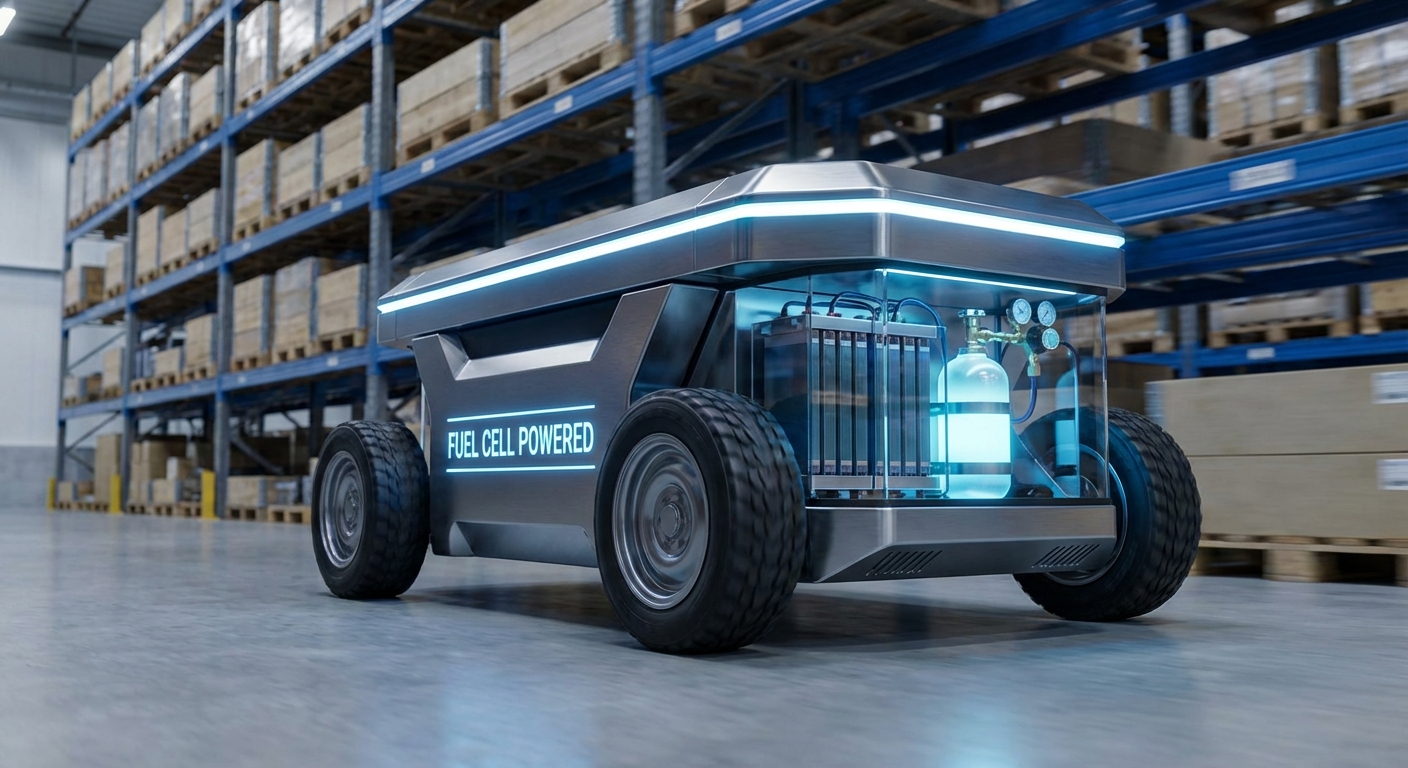
Supercharge your AGV fleet with hydrogen fuel cells. Ditch battery recharge waits, keep steady voltage under big loads, and run true 24/7 in high-volume logistics.
Core Concepts
Rapid Refueling
Batteries take hours to juice up—hydrogen tanks refill in 2-3 minutes, keeping robots hustling.
Constant Voltage
Fuel cells deliver steady power till empty, skipping the battery 'voltage sag' as they drain.
Zero Emissions
They only spit out pure water vapor—safe for warehouses and food zones.
Hybrid Architecture
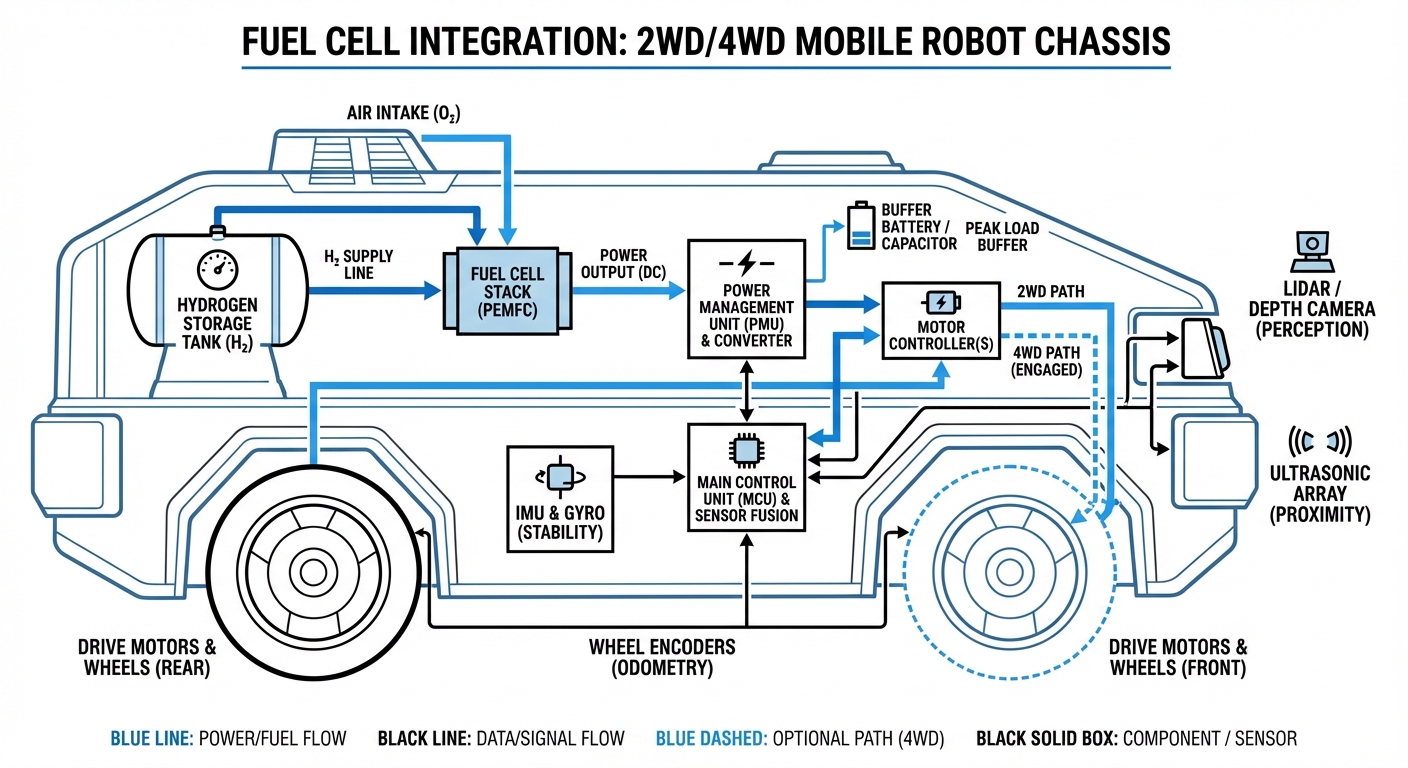
Most setups use the fuel cell to top off a small buffer battery or supercap, handling power spikes like a champ.
Energy Density
Hydrogen delivers way better energy-to-weight ratios than lead-acid or Li-Ion batteries—perfect for AGVs hauling heavy payloads.
Cold Storage
Fuel cells keep performing great in freezing temps down to -30°C, while battery chemistry usually breaks down or loses capacity fast.
How It Works: Proton Exchange Membrane
At the core of today's robotic fuel cells sits the Proton Exchange Membrane (PEM). You feed hydrogen gas into the anode side of the stack, while oxygen from the surrounding air flows into the cathode. A catalyst then splits the hydrogen into protons and electrons.
The membrane lets just the protons slip through to the cathode. The electrons have to take a detour through an external circuit, creating the electric current that drives the AGV's motors and sensors.
On the cathode side, those electrons and protons team up with oxygen to make water. This keeps generating power nonstop as long as you've got fuel, skipping the long recharge waits you get with plain battery setups.
Real-World Applications
High-Throughput Distribution Centers
In round-the-clock facilities running 24/7/365, fuel cells ditch the need for battery swap rooms or downtime charging. Robots stay on the move moving goods 99% of the time, boosting your ROI per bot big time.
Cold Chain Logistics
Cold storage warehouses are tough on batteries. Fuel cells hold steady in sub-zero spots, keeping pallet jacks and forklifts going strong without the quick drain you see in lead-acid options.
Heavy Manufacturing
When AGVs are towing hefty automotive chassis or aerospace parts, hydrogen's high energy density lets them power through long shifts under max load—no recharge pit stops needed.
Large Campus Delivery
Outdoor delivery bots roaming big university or corporate campuses love the extra range from fuel cells, cutting out 'range anxiety' and the hassle of constant docking stations.
Frequently Asked Questions
How do fuel cell costs stack up against Li-Ion batteries?
Sure, fuel cells cost more upfront for the hardware than Li-Ion batteries, but for fleets over 20 units, the Total Cost of Ownership (TCO) often drops lower. You save by skipping battery swap setups, freeing up warehouse space (no more charging rooms), and getting way more use out of each robot.
Is hydrogen fuel safe for indoor use?
Yep, today's hydrogen systems meet strict safety standards. Hydrogen's lighter than air and rises quick if there's a leak, unlike propane that hangs around low. Robot setups include leak sensors and auto-shutoff valves for safe indoor use.
How is the hydrogen supplied to the facility?
Hydrogen arrives by truck—either liquid or compressed gas—to an outdoor tank, just like propane or diesel. Big sites can even make their own with on-site electrolyzers, splitting water with electricity for a closed-loop energy system.
What's the usual lifespan for a fuel cell stack?
Today's PEM stacks for material handling last 10,000 to 20,000 hours of runtime before a refurb or swap. That lines up nicely with your AGV chassis life for easy planning.
Can I retrofit my existing battery-powered AGVs?
Yes, lots of fuel cell power packs are 'drop-in' swaps for standard lead-acid battery spots. Same size, same voltage, so you can upgrade your current fleet step by step without new robots.
Do fuel cells work with regenerative braking?
Fuel cells don't store energy themselves, but the power units are hybrids with a small Li-Ion battery or supercapacitor. That buffer grabs regen braking energy and delivers burst power for lifts or speed-ups.
What maintenance is required for the power unit?
Maintenance is a breeze compared to lead-acid (no watering!). Just swap the air filter now and then to keep dust out, and check the cooling system every six months or so.
How does refueling work for an AGV?
Refueling's simple: an operator hooks up the nozzle like at a gas station. It locks in, fills in 1-3 minutes. Fully automated stations are coming online too, for zero-touch ops.
What happens if the hydrogen runs out mid-task?
The onboard Battery Management System (BMS) tracks fuel levels non-stop. It sends bots home or alerts staff when fuel hits a low threshold like 10%, so no one gets stuck.
Does altitude affect fuel cell performance?
Fuel cells pull oxygen from the air, so super high altitudes with thin air can trim peak power a bit. But warehouse compressors handle it automatically for most spots.
What are the environmental benefits?
At the robot, fuel cells emit zero carbon. Pair with green hydrogen from renewables, and your whole energy chain goes carbon-neutral—slashing your facility's footprint way more than grid-charged batteries.
Are there voltage drops as the tank empties?
Nope. Batteries sag in voltage as they drain, slowing the robot down. Fuel cells deliver steady full voltage right to the end of the tank, keeping speed and lift consistent.
Ready to implement Fuel Cells in your fleet?
Switch to hydrogen and boost fleet productivity up to 15%. Hit up our engineering team for a free site check.
Explore Our Robots