CNC Machining
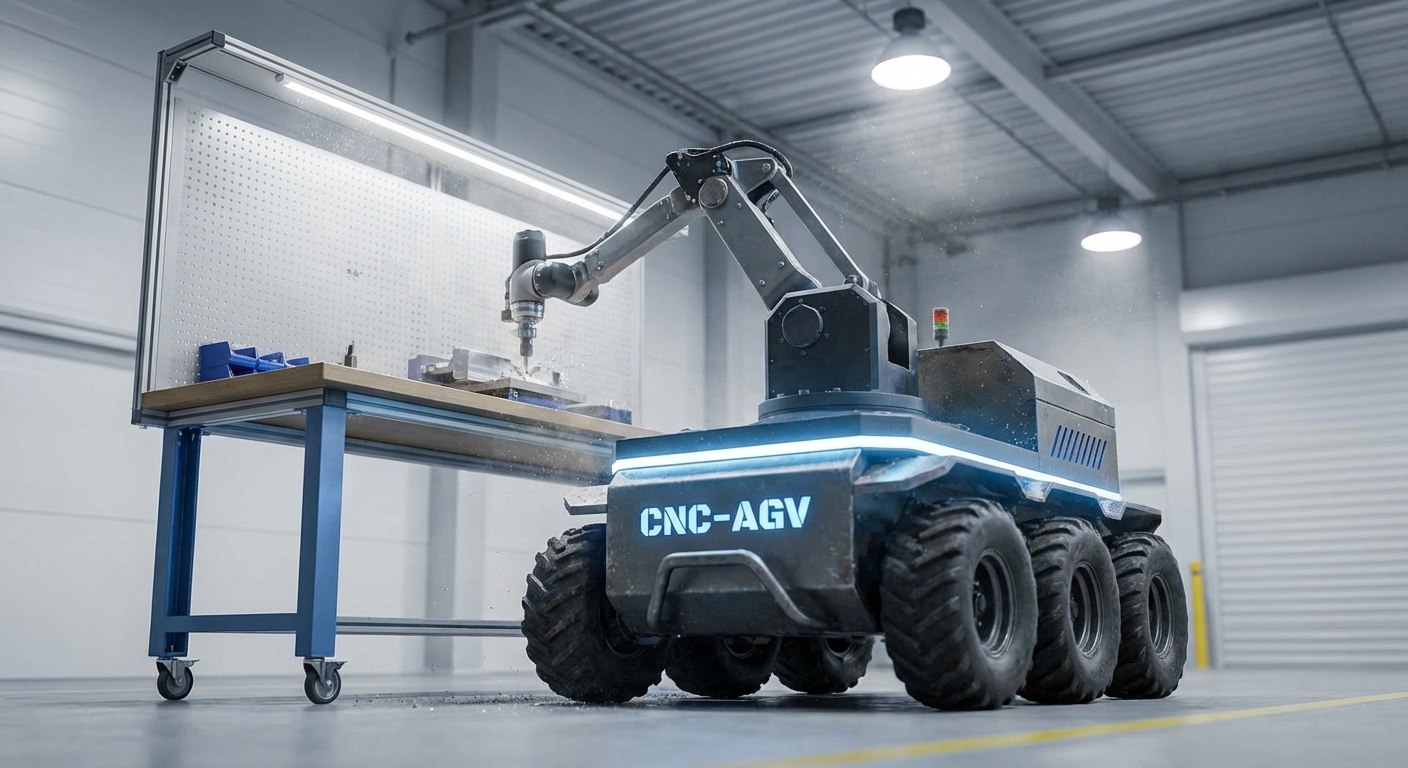
Precision meets true autonomy. See how CNC manufacturing crafts those ultra-precise chassis, custom sensor housings, and tough drivetrain parts that modern AGVs rely on.
Core Concepts
Subtractive Manufacturing
Unlike 3D printing, CNC carves parts from solid blocks for unbeatable structural strength—crucial for heavy-duty AGVs.
Micron-Level Precision
Hits crazy-tight tolerances (±0.005mm) perfect for gearbox assemblies, bearing fits, and pinpoint wheel alignment on mobile robots.
Multi-Axis Control
We use 3-, 4-, and 5-axis machines to shape complex stuff like omnidirectional wheels and tricky robotic joints.
Material Versatility
Handles Aluminum 6061 for light frames, stainless steel for clean ops, or Delrin for slick, low-friction pads.
G-Code Automation
Turns CAD files into machine instructions for dead-on repeatable spares across your robot fleet.
Surface Finishing
Post-machining anodizing or powder coating shields parts from corrosion and electrical noise in rough warehouses.
From CAD to Autonomous Reality
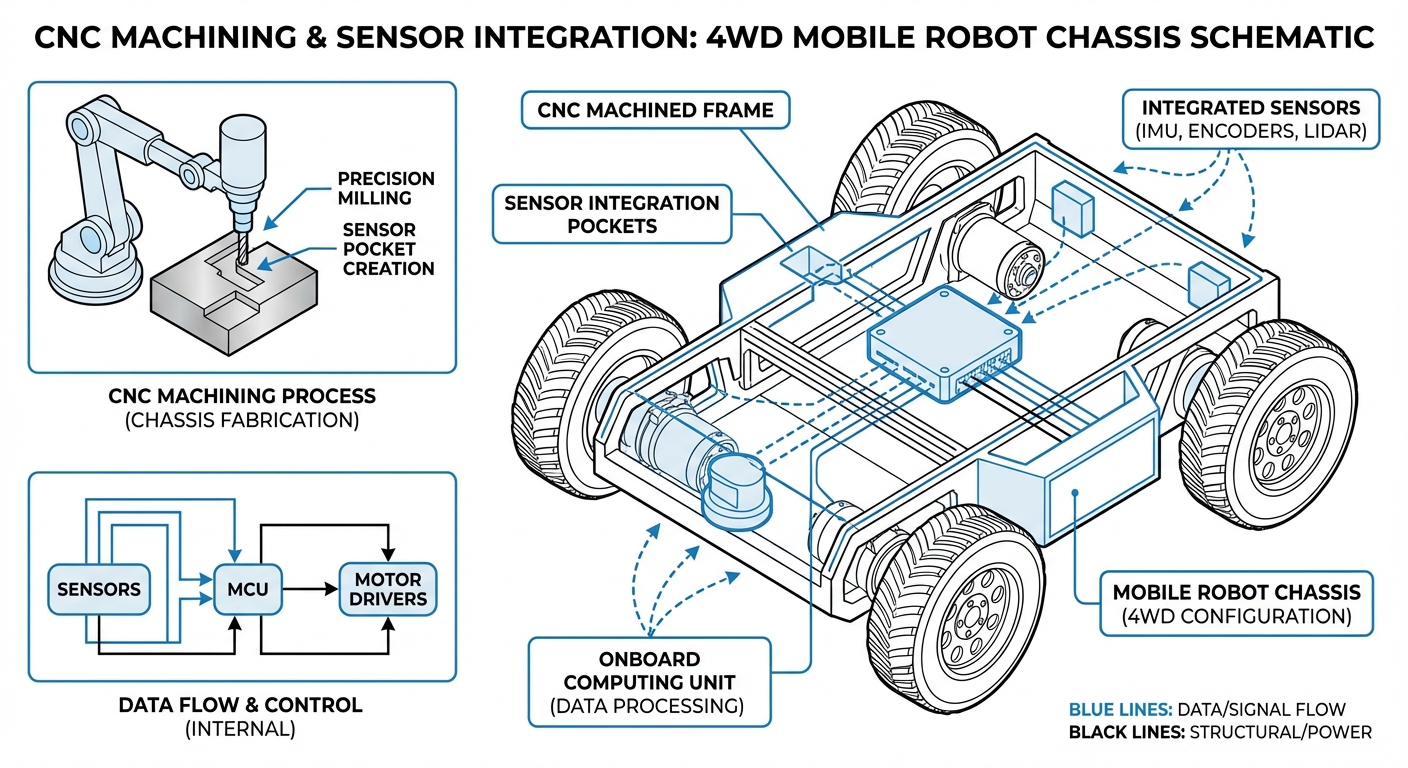
An AGV part's adventure starts in CAD software. Engineers sketch tough bits like chassis plates or suspension arms, then turn them into CAM instructions.
The CNC machine spins high-speed tools to sculpt the part from a solid raw block. For robots, it's essential for rigid, flat perfection needed for LiDAR mounts and motors.
No heat warping like with casting or welding—CNC keeps kinematic models matching the real hardware down to micrometers.
Real-World Applications in AGVs
Custom Chassis Fabrication
Crafts unibody aluminum frames from billets for killer strength-to-weight, ideal for long-haul, high-payload bots.
LiDAR & Sensor Mounts
Builds sturdy, vibe-dampening homes for nav sensors, with machining so precise the view angle stays rock-solid.
Drivetrain Components
Whips up custom gearboxes, motor mounts, and wheel hubs with H7 tolerances for buttery-smooth bearing fits and control.
End-Effector Tooling
Quickly makes bespoke 'hands' or forks for AGVs, letting a standard base tackle pallet lifts or bin grabs.
Frequently Asked Questions
Why pick CNC over 3D printing for robot parts?
3D printing rocks for prototypes, but CNC delivers isotropic strength and top material performance. For AGV chassis and drivetrains under load, metal CNC stops fatigue cracks and takes massive dynamic forces.
What is the best material for AGV chassis construction?
Aluminum 6061-T6 rules for its strength-to-weight, rust resistance, and ease of machining. High-stress gears or axles? Go 4140 Steel or 304 Stainless, even if it bulks up a bit.
Do I need 5-axis machining for my robot design?
Most AGV parts work fine on 3-axis machines, but 5-axis shines for wild shapes like omni wheel hubs or sensor pods—less setup, better accuracy from all angles.
How does CNC affect robot fleet costs?
CNC's setup costs more upfront than printing, but beats molding for 1-1000 units. For fleets, tougher parts mean less maintenance and swaps, boosting your ROI big time.
What tolerances should I specify for bearing fits?
For wheel or joint bearings, H7 (holes) and g6 (shafts) are standard ISO fits. Don't over-tighten tolerances unless needed—it jacks up costs fast.
Can CNC machining handle plastic parts for robotics?
Totally. Plastics like Delrin (Acetal), Nylon, and PEEK get machined often for AGVs. Delrin's a fave for gears and slides—self-lubes and machines like a dream.
How to robot-proof your design for CNC (DFM)?
Design for Manufacturing means rounding internal corners (end mills are round), skipping deep pockets, and keeping setups simple to slash time and cash.
What surface finishes are recommended for exposed AGV parts?
Aluminum? Type II anodizing fights corrosion with color options for branding. Blast first to hide marks. Steel? Electroless nickel or black oxide keeps rust away.
How does CNC machining assist in thermal management?
AGV brains and drivers run hot. CNC lets you mill heatsinks right into the chassis—fins and all—for slick cooling without extra bolted junk.
Can you tweak CNC parts post-machining?
Sure, unlike molds—metal CNC lets you drill new holes or shave surfaces if designs evolve. Gold for R&D iteration.
What's the usual wait for custom AGV parts?
Depends on shop busyness and complexity. Basic 3-axis? 3-5 days. Fancy multi-axis or big batches? 2-4 weeks, including sourcing and finishes.
How does CNC machining ensure part consistency?
Verified G-code means identical paths every run. So a field-broken suspension arm gets a perfect-fit replacement—no tweaks needed.