Carbon Fiber Composites
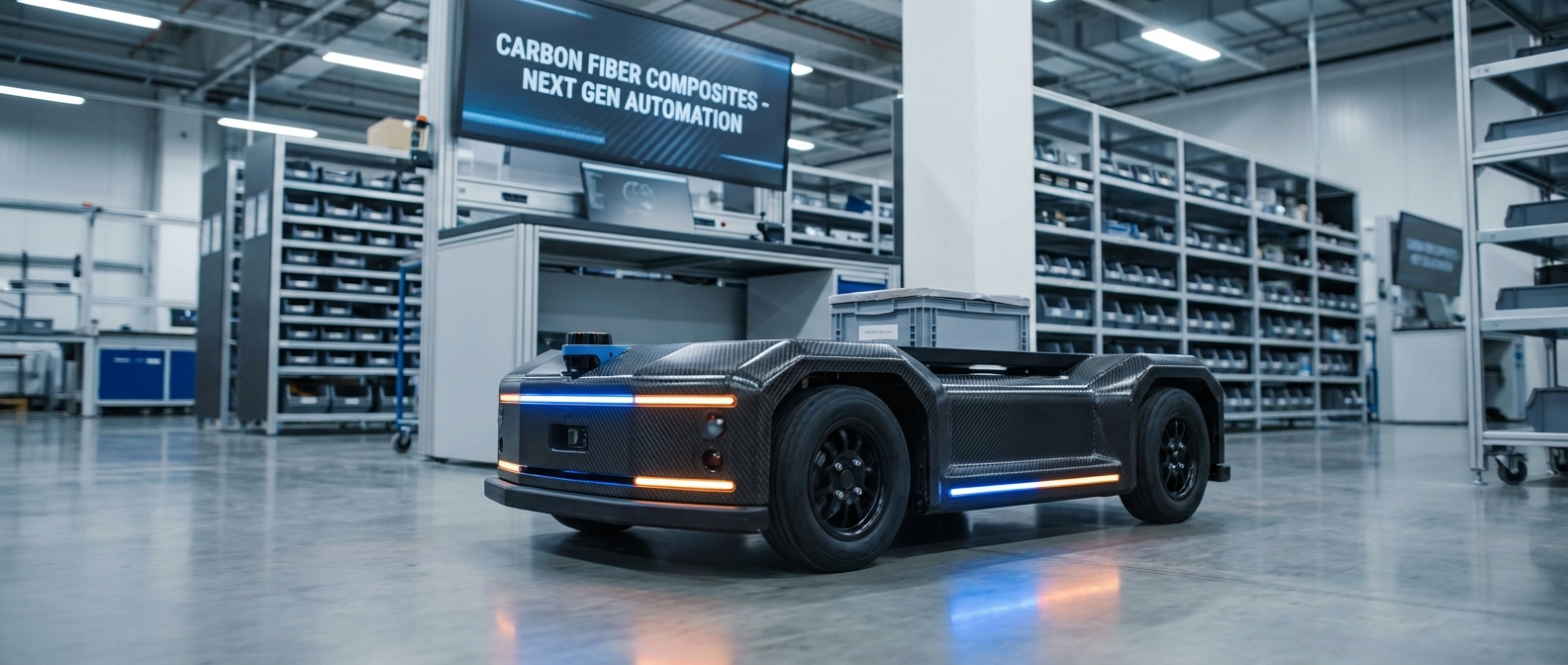
Transform your AGV fleet's efficiency by slashing chassis weight while keeping rock-solid strength. Carbon fiber composites pack unbeatable strength-to-weight ratios, stretching battery life and boosting your mobile robots' speed and agility.
Core Concepts
Strength-to-Weight Ratio
Carbon fiber boasts specific strength up to 5x that of steel. For AGVs, that translates to less energy wasted hauling the chassis itself, leaving more juice for your payloads.
Anisotropic Properties
Unlike metals, you can tweak composite strength in specific directions. Engineers align the fibers to handle the exact stresses from robotic lifts or sharp turns.
Fatigue Resistance
Composites don't bend and stay bent like metals do. They hold their shape through millions of cycles—perfect for non-stop 24/7 warehouse ops.
Vibration Damping
That polymer matrix soaks up vibrations way better than metal, shielding your LIDAR sensors and onboard computers from jittery noise on the move.
Corrosion Immunity
No rust worries with carbon fiber composites. They're a dream for humid spots, chemical plants, or anywhere needing regular washdowns.
Thermal Stability
Carbon fiber barely expands with heat—near-zero thermal growth. Your chassis stays dead-on precise no matter the temp, essential for spot-on docking.
The Composite Architecture
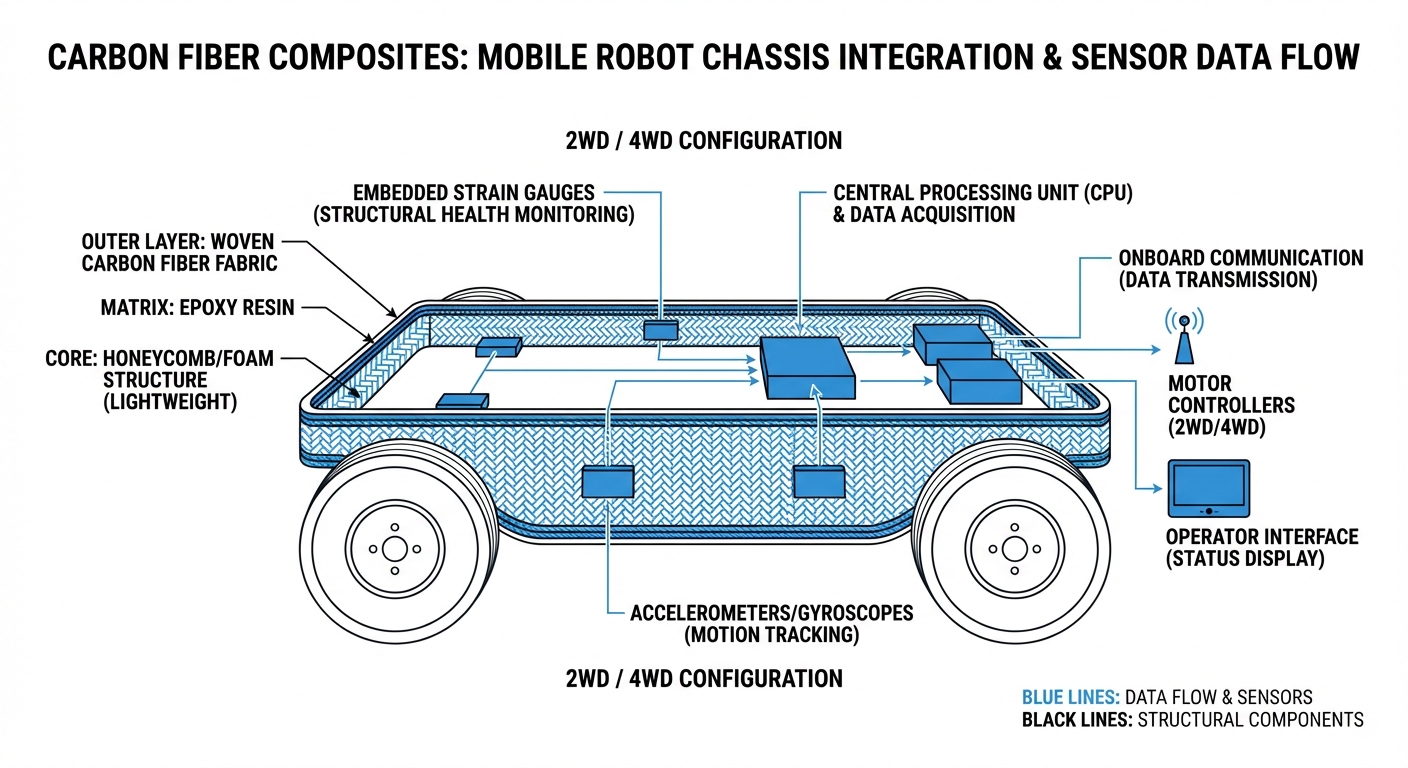
Carbon fiber composites blend carbon fibers (the tough reinforcement) with a polymer resin matrix (like epoxy) to unlock properties neither material has solo.
In AGV builds, those tiny carbon fiber crystals deliver insane tensile strength. The resin spreads loads between fibers and shields them from the elements.
With fancy lay-up tricks and autoclave curing, you can shape sleek, aero-optimized forms that fuse parts right into the body—fewer pieces, quicker assembly than welded steel.
Real-World Applications
High-Speed Sorting Shuttles
In AS/RS setups, low inertia is king. Carbon fiber shuttles zip up acceleration and braking, boosting throughput by up to 30% hourly over aluminum.
Heavy Payload AGVs
For hauling 1,000kg+ pallets, every chassis kilo saved means more payload room. Composites let you go slimmer to squeeze through tight aisles.
Cleanroom & Medical Robotics
No particles, no magnetism—composites shine in MRI rooms or chip fabs where metal dust or interference is a no-go.
Collaborative Robot Arms (Cobots)
Mobile manipulators on AGVs thrive with carbon fiber arms. Lighter links cut tipping forces, so your base can stay smaller and steadier.
Frequently Asked Questions
How does the cost of carbon fiber stack up against aluminum or steel for AGVs?
Upfront, carbon fiber hits harder on raw materials and tooling. But ROI kicks in fast via lower energy use, tinier batteries, less motor wear—and a way lower total cost of ownership over the robot's life.
Is carbon fiber electrically conductive?
Yep, carbon fiber conducts electricity—a blessing for grounding, but watch for shorts with electronics (insulate smartly). And no direct aluminum bolting without a fiberglass/plastic barrier to dodge galvanic corrosion.
How repairable is a carbon fiber chassis after an AGV crash?
Not like welding bent steel. Damage here is often deep, needing pro patches or swaps. But it's tough as nails within limits—no dents, stays rigid till it really fails.
Does carbon fiber block WiFi or RF signals?
Yep, carbon fiber blocks radio waves big time (Faraday effect). For AGV shells, route antennas outside or cut 'windows' from RF-friendly fiberglass or Kevlar for your comms gear.
What is the typical weight saving percentage?
Ditching steel for carbon fiber? Expect 40-60% lighter. Versus aluminum, it's 20-30% savings, but with way more stiffness and endurance.
How does it handle shock loading (e.g., dropping a pallet)?
Engineer it right with tough resins or Kevlar hybrids for big impacts. Metals deform to absorb; composites microcrack or delam—check after big hits.
Is it suitable for outdoor mobile robots?
Totally. Carbon fiber laughs off corrosion and wear. Just UV-stabilize or coat the epoxy for long sun exposure.
What manufacturing method is best for AGV fleets?
Prototypes? Hand lay-up or vacuum bagging. Scaling to 100+ units? RTM or compression molding for consistency, slick finishes, and quick cycles.
Can we recycle carbon fiber AGV chassis at end-of-life?
Tricky but getting better. Pyrolysis torches the resin to reclaim fibers for reuse in non-structural molded parts—not as simple as melting aluminum.
Does carbon fiber degrade over time with battery heat?
Standard epoxies hit Glass Transition Temps of 80-150°C. Fine for typical batteries/electronics. Hot spots? Go high-temp resins.
Is it possible to embed sensors directly into the composite?
Absolutely—'smart composites.' Lay in Fiber Bragg Grating sensors or wiring during build to track health, temp, or strain live, no external wires.
How does it affect the robot's center of gravity (CoG)?
Lighter upper chassis drops the CoG (batteries/motors low). Killer for high-speed turns and tip-proof tall bots.