Mining Tunnel Inspection
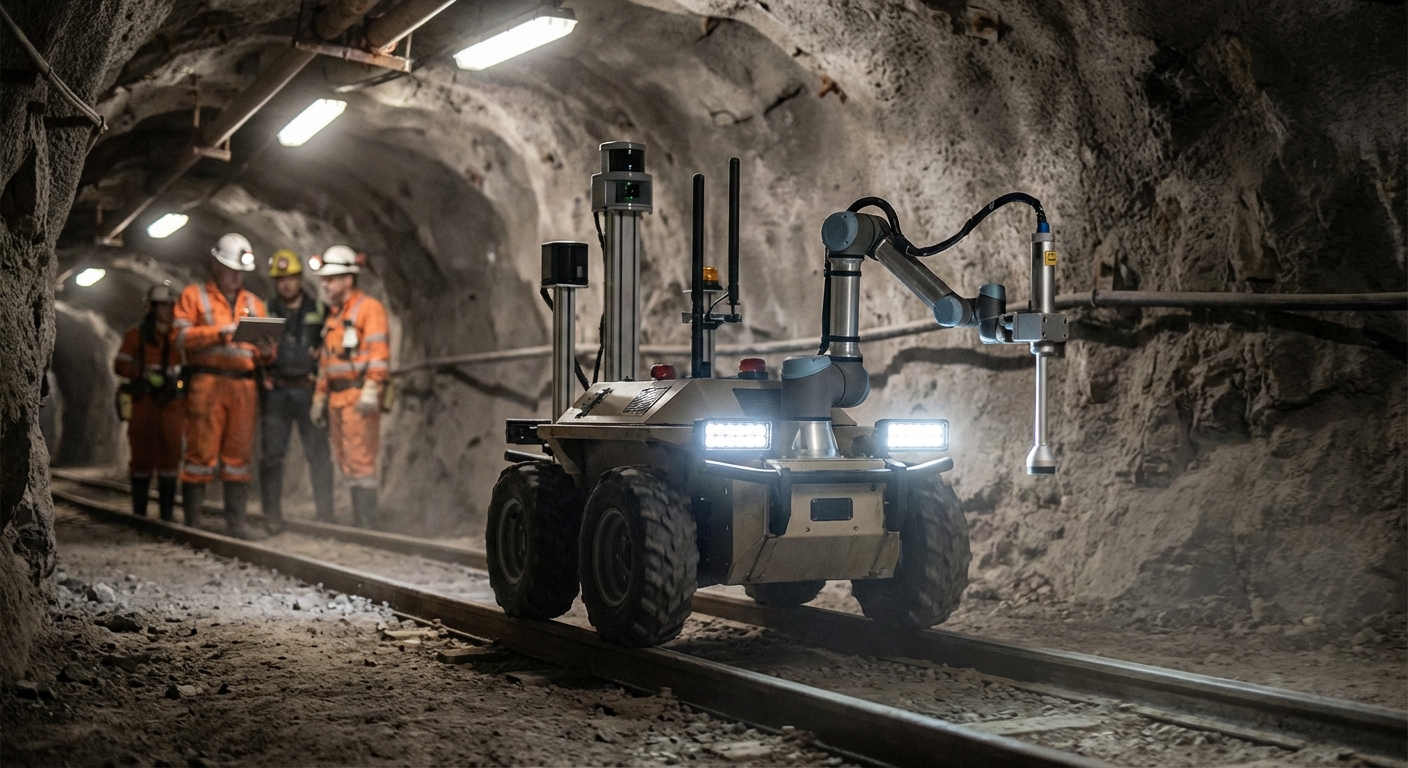
Send autonomous robots with LiDAR and photogrammetry deep underground for rock-solid structural checks. No human risk—just capture digital twins of your tunnels.
Why Automate Mining Tunnel Inspection?
Zero Human Risk
Keep teams out of unstable, gassy, or deep areas—robots handle first inspections and routine patrols.
Digital Twin Creation
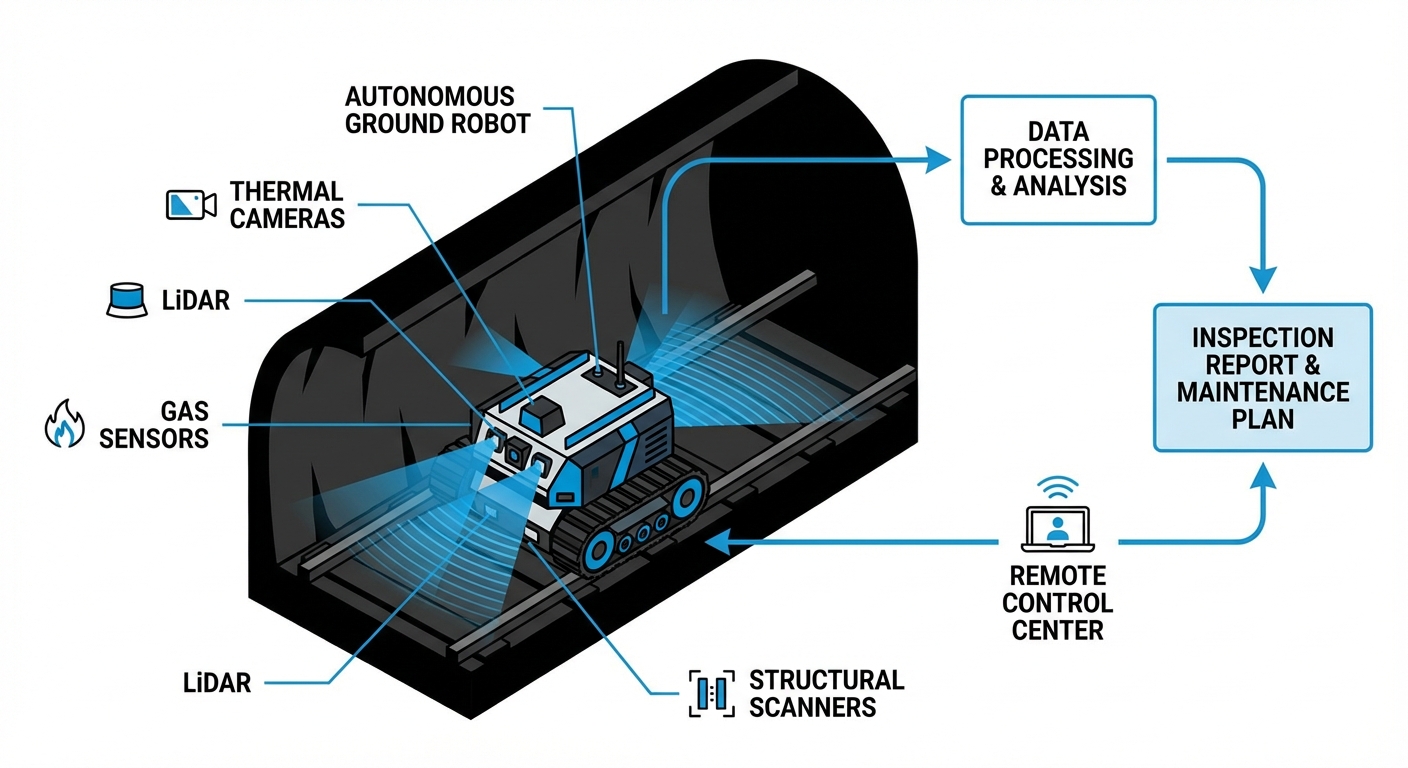
Create precise 3D point clouds and thermal scans to build an ever-evolving digital twin of your mine.
Consistent Data
Fixed routes revisit the exact same spots every time, catching even the tiniest changes.
24/7 Availability
Run checks during blasts or shifts for full uptime.
Multi-Hazard Detection
Detect cracks, leaks, gas pockets, and heat issues all in a single pass.
Cost Efficiency
Cut insurance hikes and survey bills, avert disasters.
Autonomous Underground Navigation
GPS-free, featureless mines baffle old-school navigation. We use SLAM with dense LiDAR.
Real-time tunnel mapping delivers centimeter-accurate positioning, fusing IMU and wheel data even on rough terrain.
Edge NVIDIA Jetsons spot hazards live; full datasets sync via Wi-Fi or store for later upload.
Where It's Used
Active Ore Mining
Daily runs through drifts and belt tunnels catch wall shifts or loose overheads before they threaten workers.
Abandoned Mine Reclamation
Safely scan flooded or toxic old shafts for environmental and structural assessments—no humans required.
Civil Infrastructure Tunnels
Subways, utilities, sewers for rust, water, spalling.
Disaster Response
Quick post-quake or collapse route checks for rescuers.
What You Need
| Component | Specification Requirement |
|---|---|
| Robot Chassis | Ruggedized IP65+ rover or quadruped with high ground clearance |
| Primary Sensor | 3D LIDAR (100m+ range, 360° FOV) |
| Environmental Sensors | Gas detector (CO, CH4, O2), Thermal Camera, Humidity Sensor |
| Compute | Edge AI like NVIDIA Jetson Orin for live SLAM |
| Connectivity | Mesh Wi-Fi nodes or Store-and-Forward capability |
Frequently Asked Questions
How does the robot navigate without GPS?
LiDAR SLAM builds 3D tunnel maps on the fly, pinpointing locations using walls and scans to centimeter precision.
Can the robot handle wet or muddy terrain?
Yes. IP65+ chassis—wheels or legs—with high-torque drive and treads to conquer mud, water, and gravel in mines.
What is the battery life for a typical mission?
2-4 hour runtime depending on load and terrain. Docks or quick swaps enable 24/7 operation.
Does the robot detect hazardous gases?
Modular sensors: multi-gas detectors for methane, CO, H2S, O2, with instant breach alerts.
How is data retrieved from deep underground?
Mesh Wi-Fi streams data live; offline mode stores TBs and uploads when back in range.
Can it detect cracks in the tunnel ceiling?
Yes. Photos plus LiDAR spot fissures, bolts, and spalls more clearly than the human eye in low light.
Is lighting required in the tunnel?
LiDAR ignores dark; LEDs light visuals for pics/video.
How fast does the robot move?
0.5-1.5 m/s for top data quality; ramps up to 2.5 m/s between checkpoints.
What happens if the robot gets stuck?
Auto-backup/rotate if stuck; beacons location, teleop if connected.
Is the equipment explosion-proof?
ATEX/IECEx enclosures for explosive zones 1/2, spark-proof.
Ready to implement Mining Tunnel Inspection?
Enhance safety and digitize your underground assets today.
Explore Our Robots