Laboratory Sample Transport
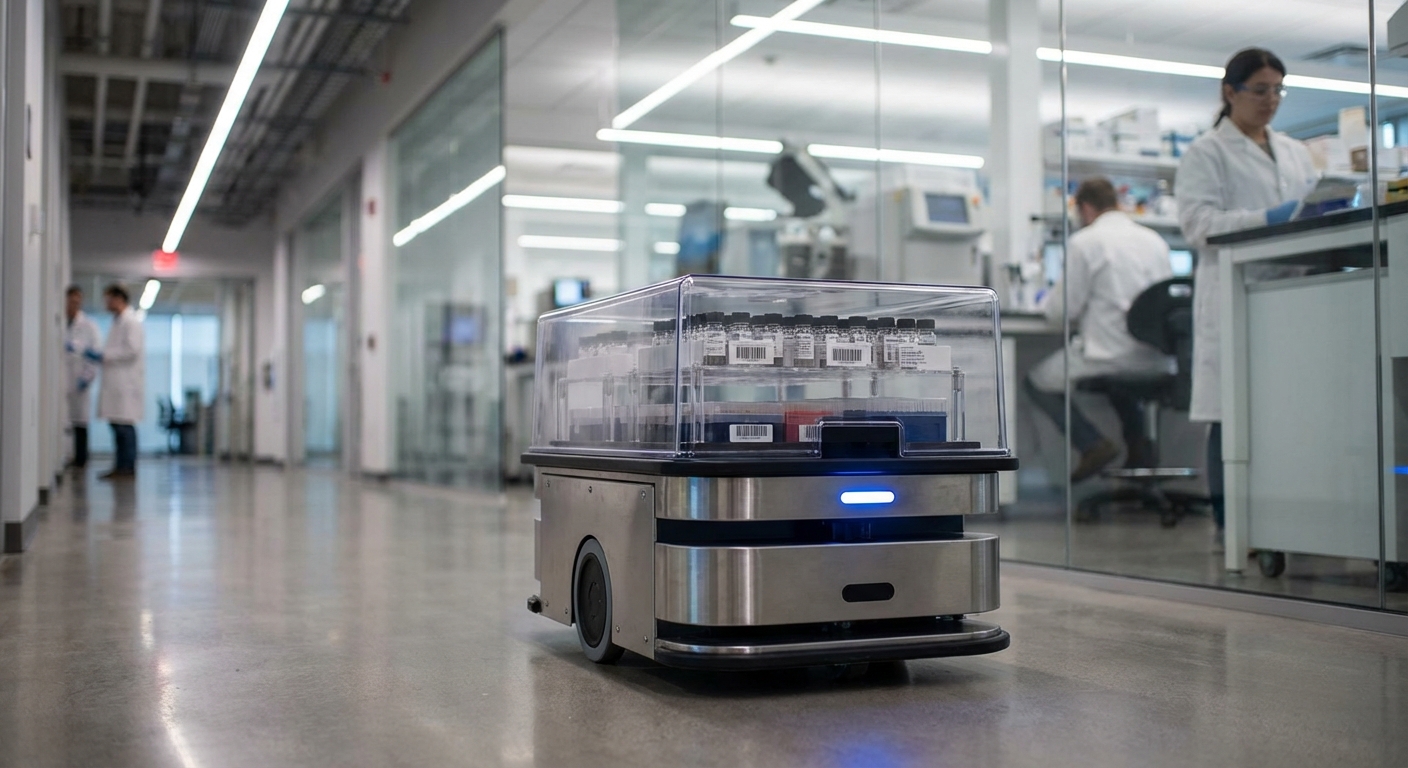
Streamline transporting biological specimens from collection to testing stations – securely and efficiently. Reduce human errors, minimize contamination risks, and free up techs for analysis instead of sample hauling.
Why Automate Laboratory Sample Transport?
Chain of Custody
Digital logs track each sample's trip from pickup to drop-off, building a rock-solid audit trail for compliance.
Contamination Control
Keeps human traffic low in clean zones. Robots are easy to sterilize and won't bring in contaminants from outside.
Increased Throughput
They keep going non-stop, managing surges without samples sitting idle.
Staff Optimization
Frees up lab techs and nurses from endless hallway walks, giving them more time for patient care and analysis.
Secure Transport
Biometric or RFID locks ensure only authorized staff can access sensitive samples.
Cost Reduction
Solid ROI from cutting courier costs, reducing breakage, and optimizing staff in healthcare settings.
Seamless Integration into Workflow
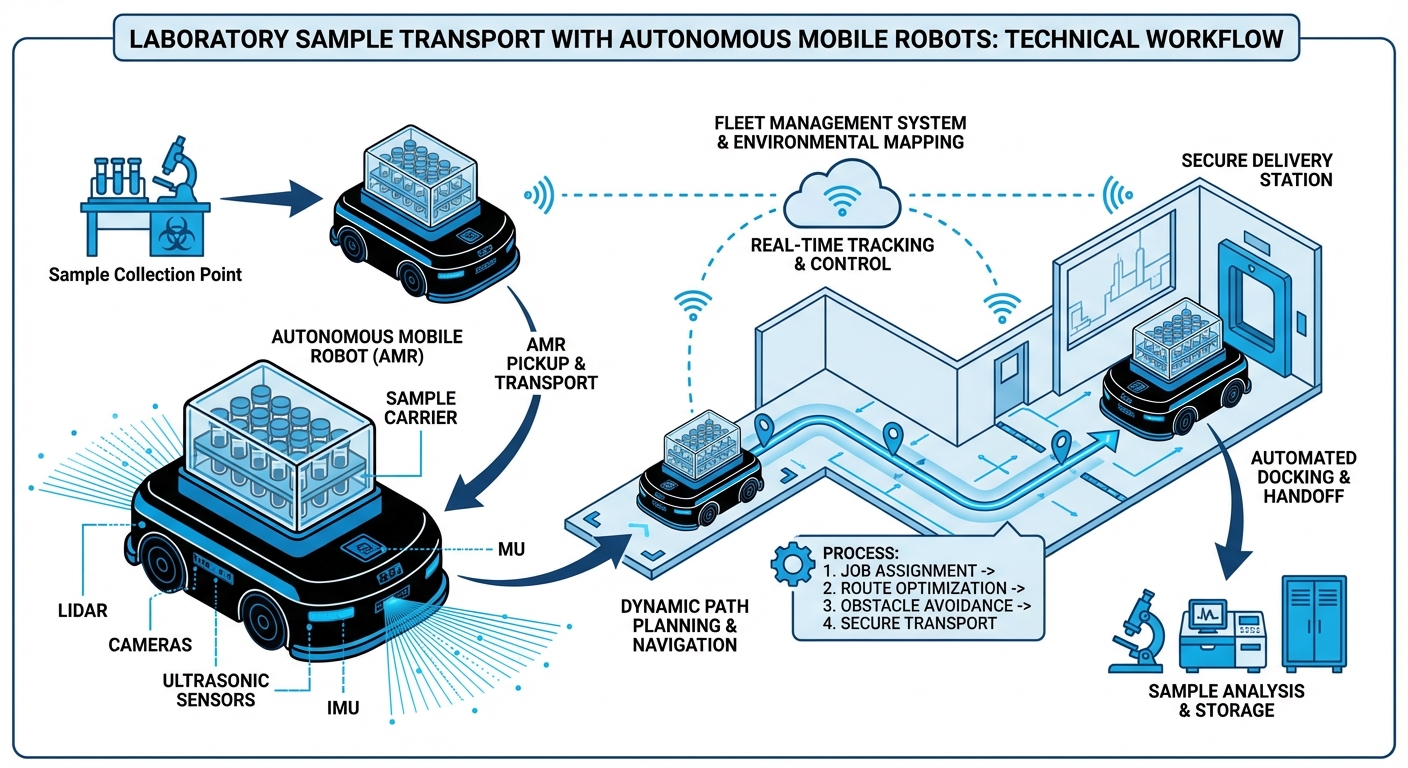
Powered by LiDAR and SLAM, the robot navigates the facility on its own. Staff load vials at stations and call it via touchscreen or LIS integration.
It integrates with building systems to open doors and summon elevators, zipping between floors effortlessly.
At the lab, it notifies staff upon arrival. In full auto mode, it docks directly to the track system for smooth handoff.
Where It's Used
Clinical Hospital Networks
Connects ERs, phlebotomy areas, and wards directly to pathology for quicker critical results.
Pharmaceutical R&D
Shuttles screening plates between incubators, readers, and storage in large drug discovery labs.
Bio-Banking Facilities
Safely transports cryo-samples from deep freezers to workbenches, logging temperatures throughout.
Toxicology & Forensics
Provides a tamper-proof, fully logged chain of custody for legal samples with hardly any handling.
What You Need
Sensors & Perception
- 3D LiDAR for mapping and obstacle avoidance
- Depth cameras for low-object detection
- Ultrasonic sensors for glass wall detection
- RFID/Barcode reader for sample ID (Optional)
Robot Capabilities
- Smooth acceleration (to prevent hemolysis)
- Liquid-tight, locking cargo compartment
- Self-charging capability
- Payload capacity: 5kg - 20kg
Software Stack
- Fleet Management System
- LIS (Laboratory Information System) API Bridge
- User interface for nursing stations (Tablet/Web)
- Audit log database
Facility Infrastructure
- Reliable Wi-Fi coverage in transport corridors
- Automated doors with integration relays
- Elevator integration module (for multi-floor)
- Dedicated charging station space (1m x 1m)
Frequently Asked Questions
Can the robots use elevators?
Yes – wireless modules allow them to call elevators and select floors on their own.
How secure are the samples during transport?
Compartments lock electronically, opening only to authorized RFID or PIN at the destination.
What happens if there is a spill?
Sealed, leak-proof containers contain any spills. Trays slide out for easy autoclaving and cleanup.
Does the robot shake the samples?
No – acceleration is tuned gently to prevent hemolysis or disturbing delicate samples.
Can it navigate through crowded hallways?
Yes – LiDAR and depth cameras detect obstacles like people in real time, stopping or rerouting safely.
Does it integrate with Epic/Cerner/LIS?
Yes – our API integrates seamlessly with your LIS, updating sample status at pickup and delivery.
What is the battery life?
They last 8-10 hours per charge, with opportunity charging during downtime.
How many samples can it carry?
It varies by setup, but the standard model holds 4 test tube racks (around 200 vials) or 10kg of mixed loads.
Is Wi-Fi required everywhere?
Wi-Fi works great for real-time tracking and elevators, but onboard maps keep things rolling even if the signal drops.
What is the typical ROI?
Most people see ROI in just 12-18 months by ditching couriers and freeing up staff hours.
Can it carry STAT (urgent) samples?
Yes—'Priority' mode rushes it straight to the lab, skipping other stops with lights that clear priority paths.
How is the robot cleaned?
Wipe it down with hospital-grade disinfectants. Strong IP rating handles tough cleaning, but no submersion.