Educational Research Platform
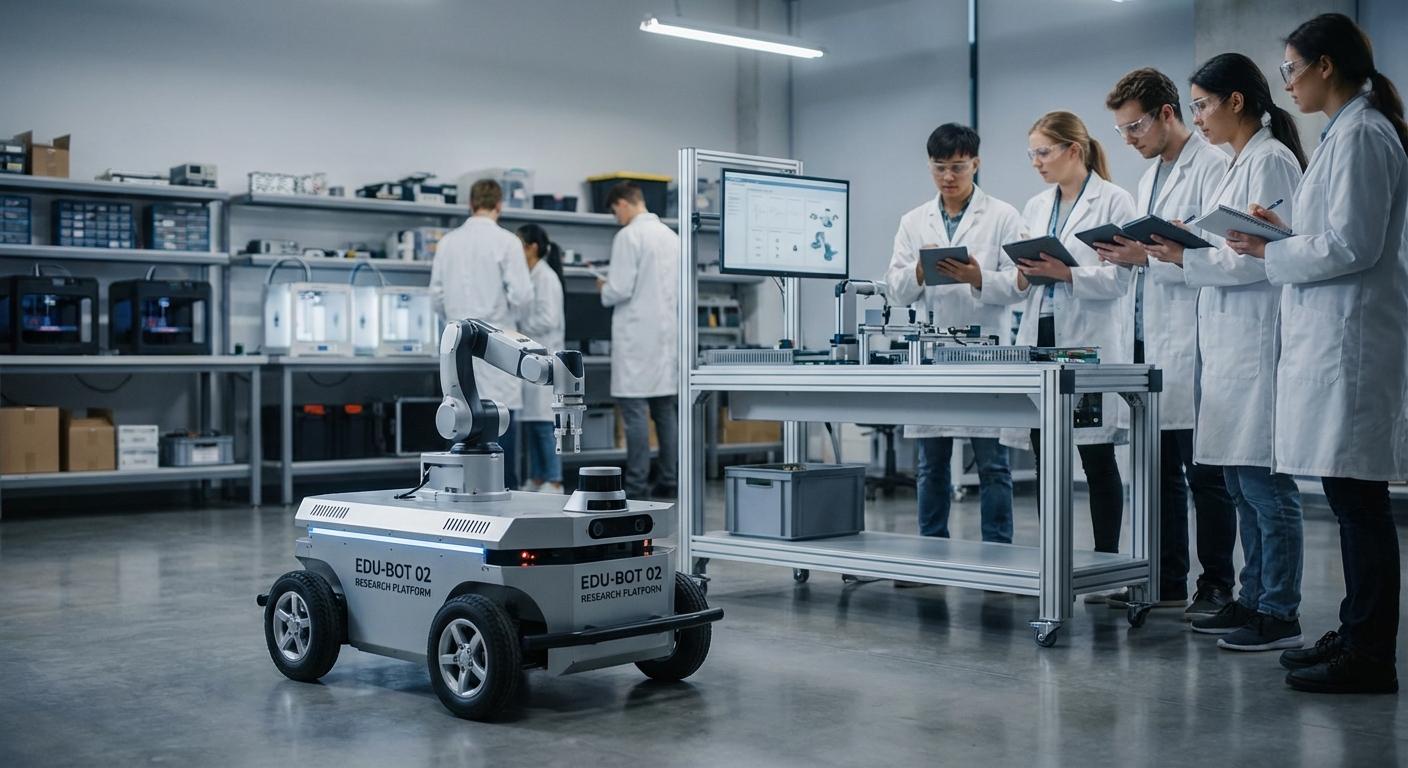
Speed up breakthroughs in academia and validation with a flexible robotic setup focused on reliable data. It connects lab algorithms to the real world, making experiments repeatable for students and researchers.
Why Automate Educational Research?
Cost-Effective Scalability
Cut the hassle of physical setups. One platform runs countless sim-to-real tests—no custom rigs needed per student.
Reproducible Data
Ditch human errors in data grabs. Robots stick to exact paths and sensor routines for consistent, apples-to-apples datasets.
Modular Hardware
Swap sensors or grippers in minutes. Tackle everything from vision to eco-monitoring on the same base.
ROS 2 Native
Built on reliable open-source tech stacks. Students get real hands-on experience with pro tools like navigation stacks and MoveIt.
Remote Labs
Access hardware from anywhere remotely. Researchers can push code no matter where they are, making global collaboration effortless.
Publication Ready
Automatically generate detailed logs and visuals. Outputs in CSV or ROSbag formats, ready to drop into research papers.
Architecture & Workflow
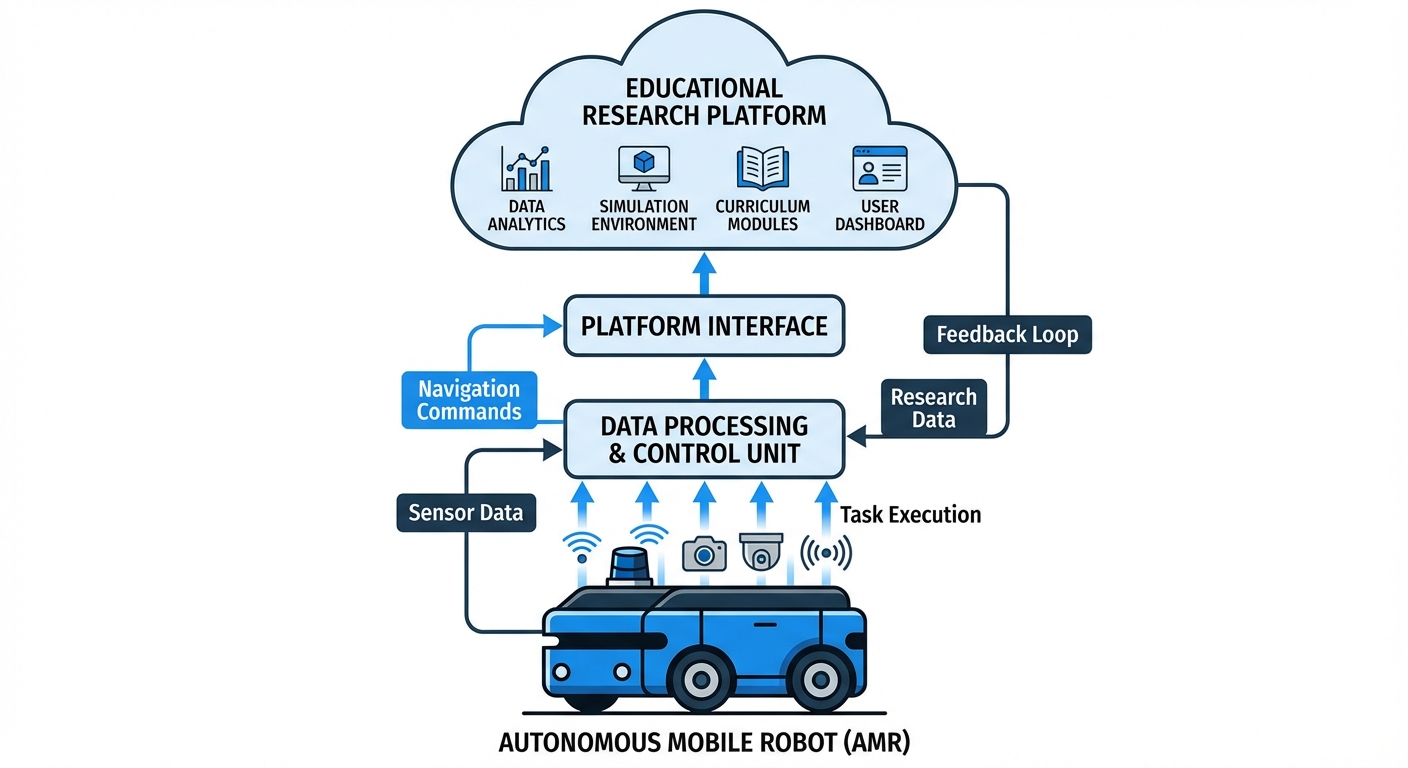
The Educational Research Platform uses a smart layered design to separate motor basics from high-level tasks, letting you refine algorithms without hardware hassles.
1. Sensing & Perception:
2. On-board Processing:
3. Data Telemetry:
Where It's Used
Computer Science Departments
Powers grad robotics classes to test ML models and path planning in real hallways, not just simulations.
Agricultural Tech Research
Outfitted with multispectral cameras for crop row navigation, capturing phenotype data and testing harvest strategies on a small scale.
Psychology & HRI
HRI research leverages it to measure human reactions to robot movements, proximity, and paths in shared spaces.
Civil Engineering
Deploys autonomous rovers to map indoor areas, generate BIM models, or detect structural issues using thermal cameras.
What You Need
- Robot Base Differential drive or Mecanum chassis with encoders
- Compute Unit NVIDIA Jetson Orin // Raspberry Pi 5 (min 8GB RAM)
- Sensors 2D/3D LiDAR, RGB-D Camera, 9-axis IMU
- Software Stack Ubuntu 22.04 LTS, ROS 2 Humble/Iron
- Connectivity Dual-band Wi-Fi 6 for telemetry, Optional 5G module